
IPS e.max veneers
Thin shells of lithium disilicate, pressed or milled, bonded to the front of the teeth. Highly esthetic and translucent, they suit a single tooth or a full smile. Because the veneer is thin, the color of the prepared tooth shows through, so the lab needs the stump shade and photos of the smile.
- Best for
- Changing shape, shade and alignment of front teeth
- Material
- Lithium disilicate, pressed or milled
- Send
- The stump shade, the case shade and photos
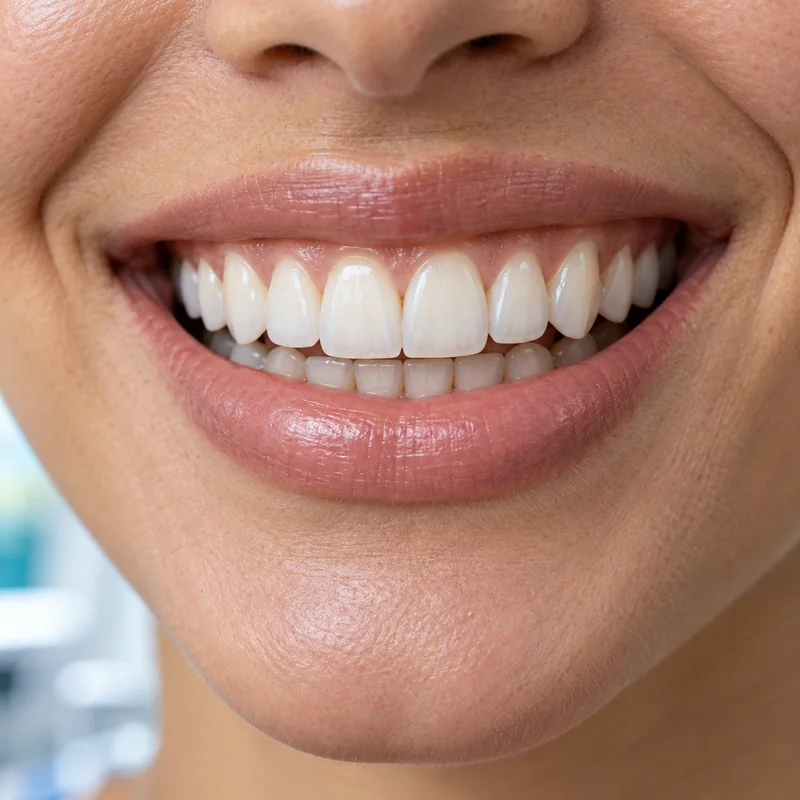 IPS e.max veneers
Thin lithium disilicate shells, translucent at the edges.
- Material
- Lithium disilicate (Ivoclar), pressed or milled
- Thickness
- From about 0.3 mm, per Ivoclar
- Reduction
- About 0.3 to 0.6 mm facial, kept in enamel where possible
- Cement
- Light-cure resin cement only; etch the veneer with hydrofluoric acid, then silane
- Send
- Full-face and retracted photos, the stump shade, and the shade you want
- Planning
- A diagnostic wax-up and mock-up before you prep makes the result predictable
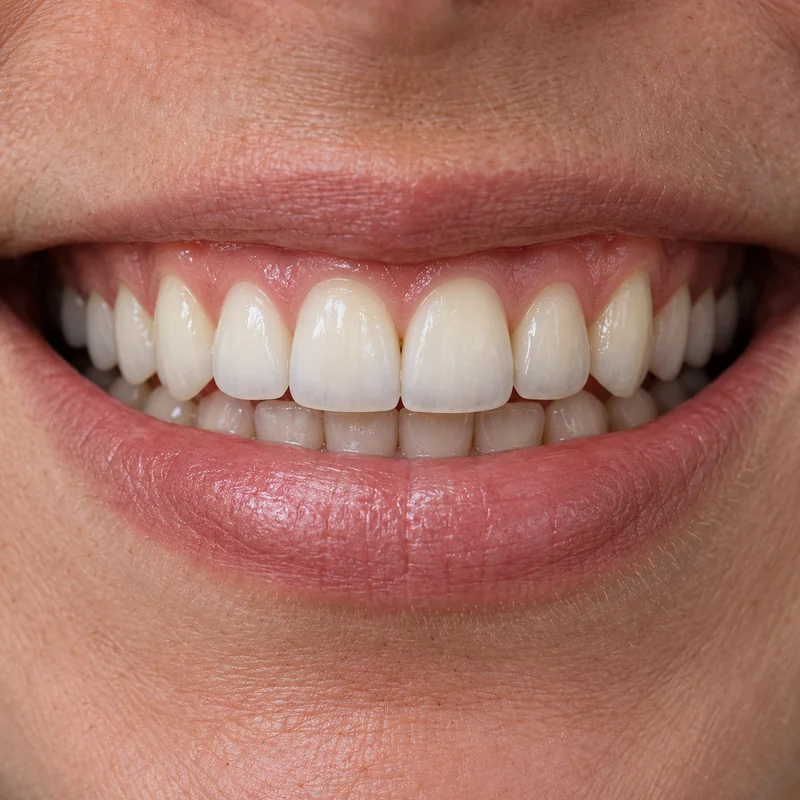 Thin by design
A veneer covers only the front surface of the tooth, so it needs far less reduction than a crown and keeps more natural enamel.
- Material
- Lithium disilicate (Ivoclar), pressed or milled
- Thickness
- From about 0.3 mm, per Ivoclar
- Reduction
- About 0.3 to 0.6 mm facial, kept in enamel where possible
- Cement
- Light-cure resin cement only; etch the veneer with hydrofluoric acid, then silane
- Send
- Full-face and retracted photos, the stump shade, and the shade you want
- Planning
- A diagnostic wax-up and mock-up before you prep makes the result predictable
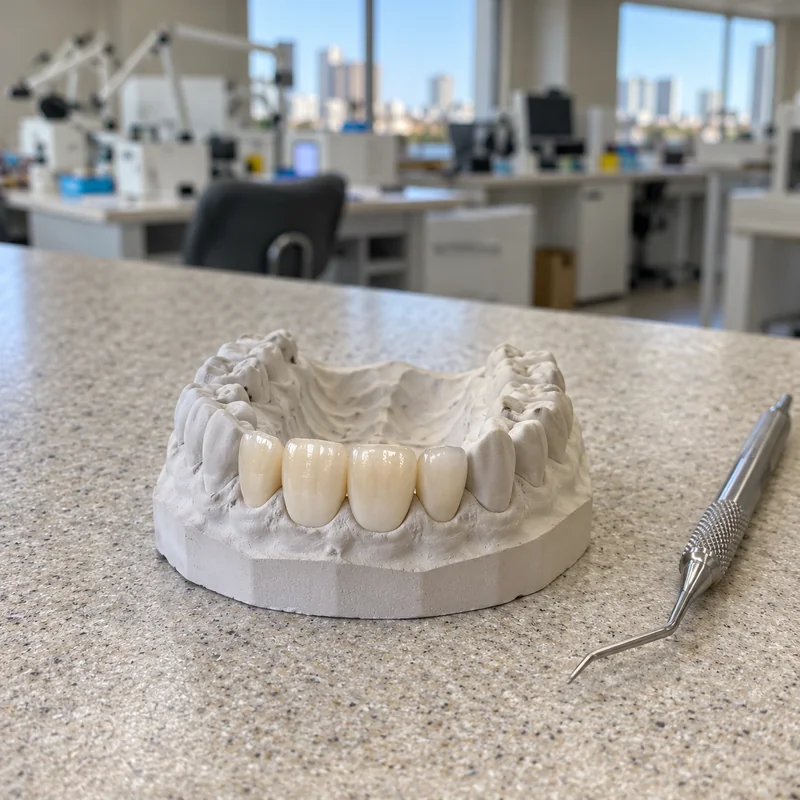 Bonded in place
Veneers are bonded with resin cement to etched enamel. The bond, not the thickness, is what holds a thin ceramic shell in place.
- Material
- Lithium disilicate (Ivoclar), pressed or milled
- Thickness
- From about 0.3 mm, per Ivoclar
- Reduction
- About 0.3 to 0.6 mm facial, kept in enamel where possible
- Cement
- Light-cure resin cement only; etch the veneer with hydrofluoric acid, then silane
- Send
- Full-face and retracted photos, the stump shade, and the shade you want
- Planning
- A diagnostic wax-up and mock-up before you prep makes the result predictable
Composite veneers
Veneers made by the lab from composite resin, the same family of materials as tooth-colored fillings, and bonded to the front of the teeth. They cost less than porcelain and can be repaired or adjusted chairside, but they stain more easily and wear sooner.
- Best for
- A lower-cost alternative to porcelain
- Material
- Composite resin
- Trade-off
- Repairable, but less stain-resistant than porcelain
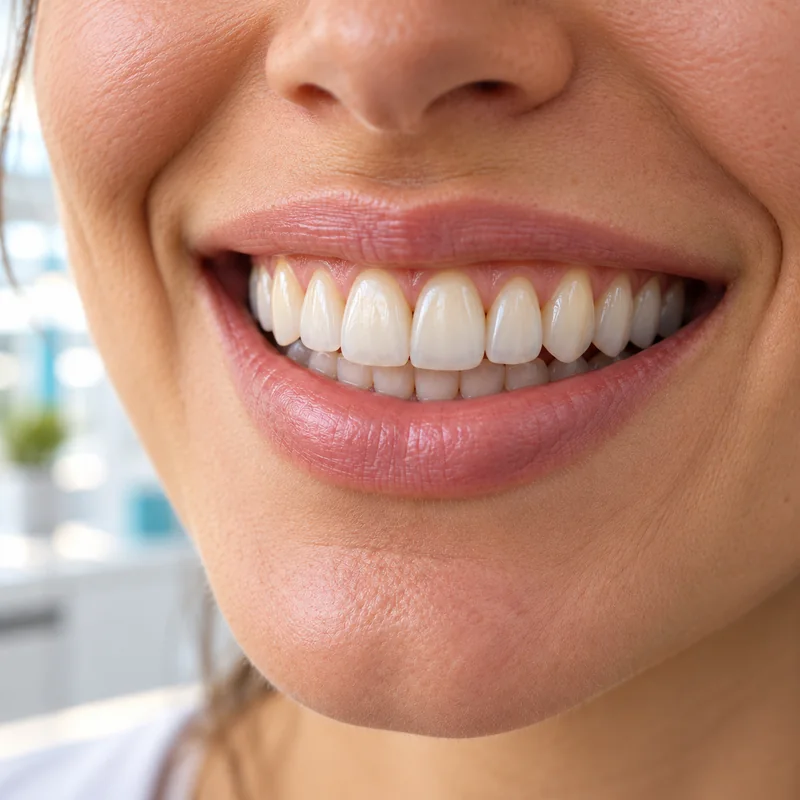 Composite veneers
Composite resin, the material of tooth-coloured fillings.
- Material
- Indirect composite resin, made on the model
- Thickness
- About 0.5 to 1 mm
- Cement
- Resin cement
- Upkeep
- Repolish at recall; chips can be repaired chairside
- Trade-off
- Lower cost than porcelain, but stains and wears sooner
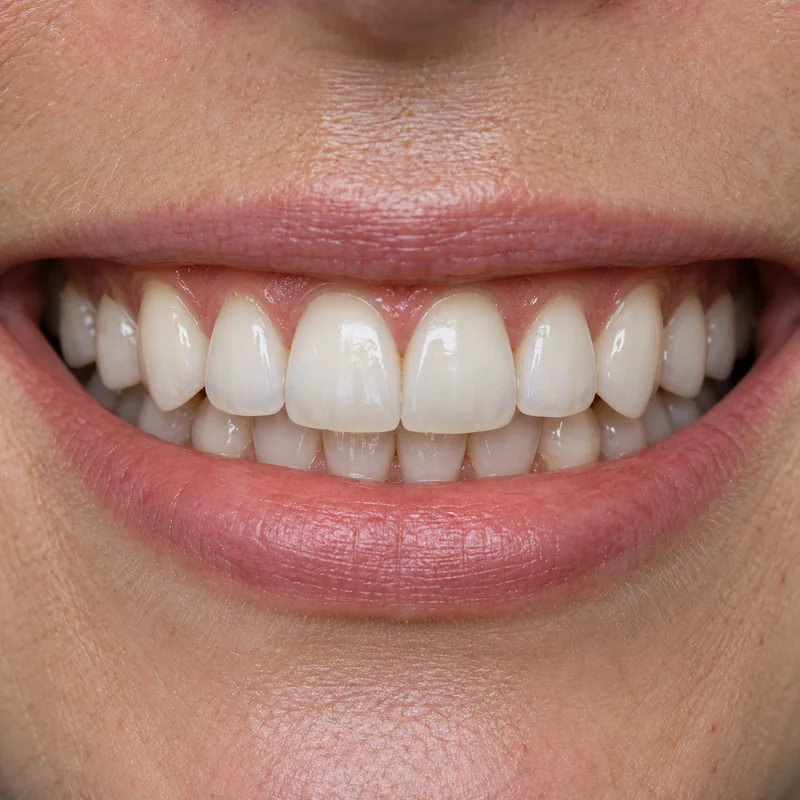 Composite or porcelain
Composite costs less and can be repaired chairside; porcelain keeps its color and gloss for longer.
- Material
- Indirect composite resin, made on the model
- Thickness
- About 0.5 to 1 mm
- Cement
- Resin cement
- Upkeep
- Repolish at recall; chips can be repaired chairside
- Trade-off
- Lower cost than porcelain, but stains and wears sooner
What to send
- Photos of the smile with the shade tab, sent with the case or through your scanner portal, and the shade you want
- A scan or impressions of both arches and the bite
- Planning a smile case? Call the lab before you prep
Talk to the lab first
Planning a smile case? Talk to us before you prep. Call (305) 940-4040, or send the lab a message.
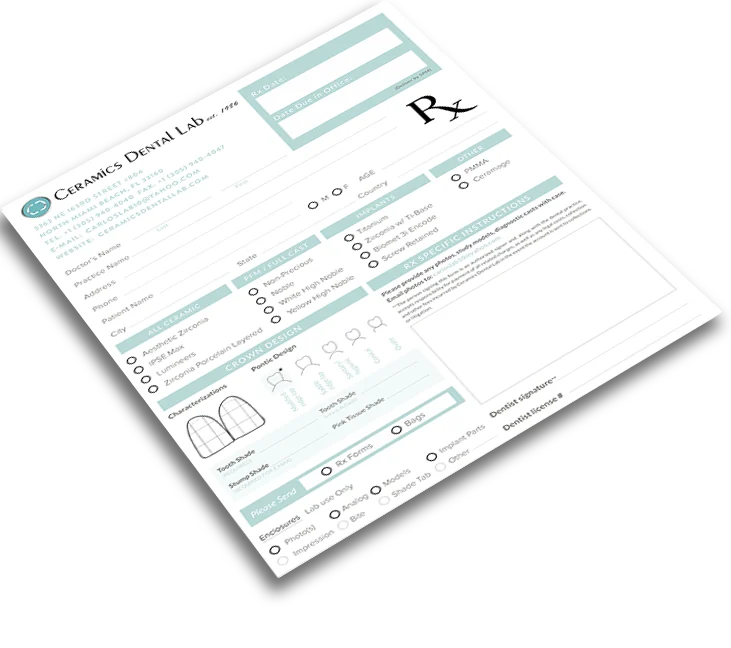
Send your case to Ceramics Dental Lab
We accept conventional impressions, and digital files from most intraoral scanners.