
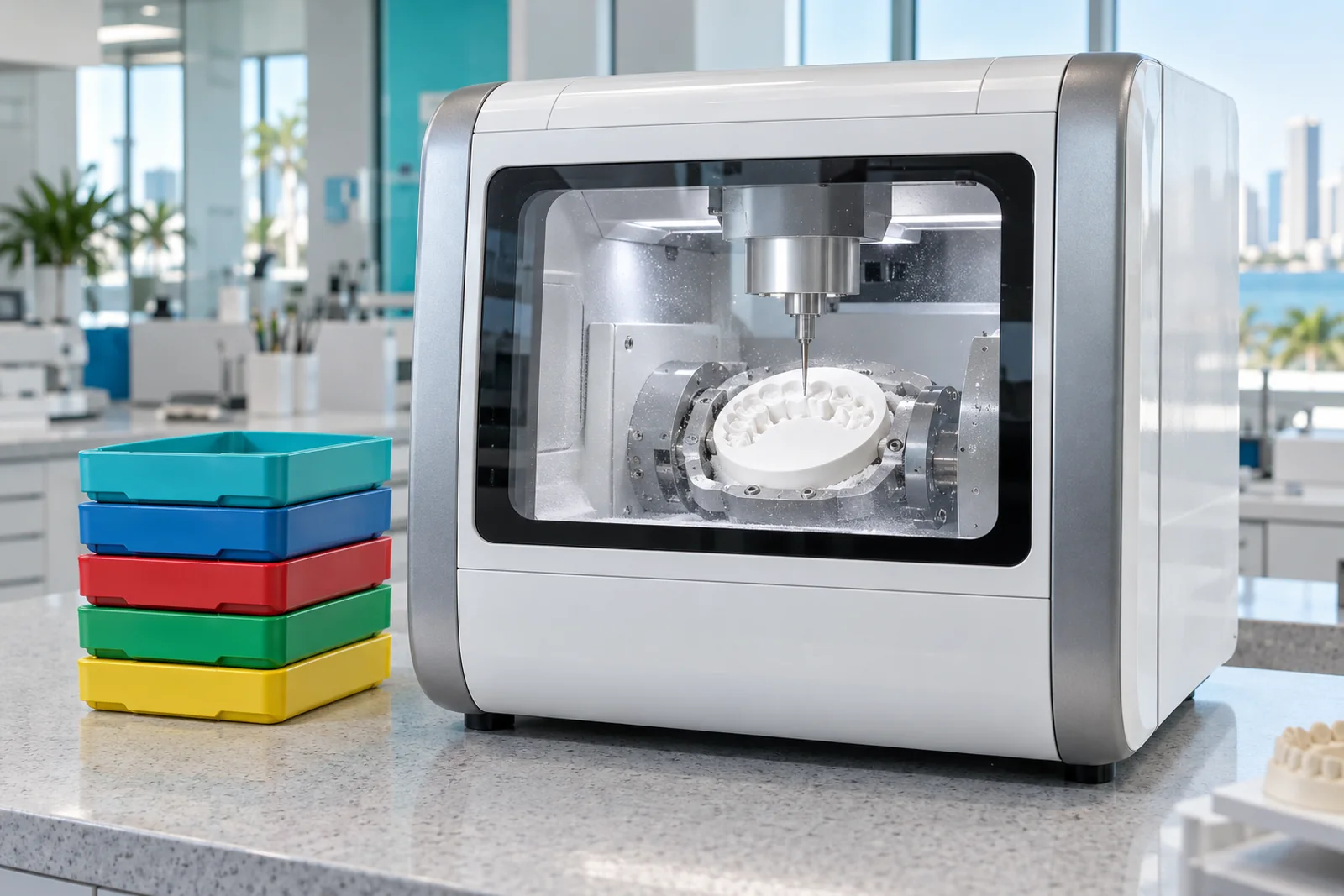
Crowns and bridges
Zirconia, IPS e.max, porcelain fused to metal and full cast, from single units to bridges. 24-hour rush crowns on request.
Five materials
Each one as the lab makes it. Choose one to read more.
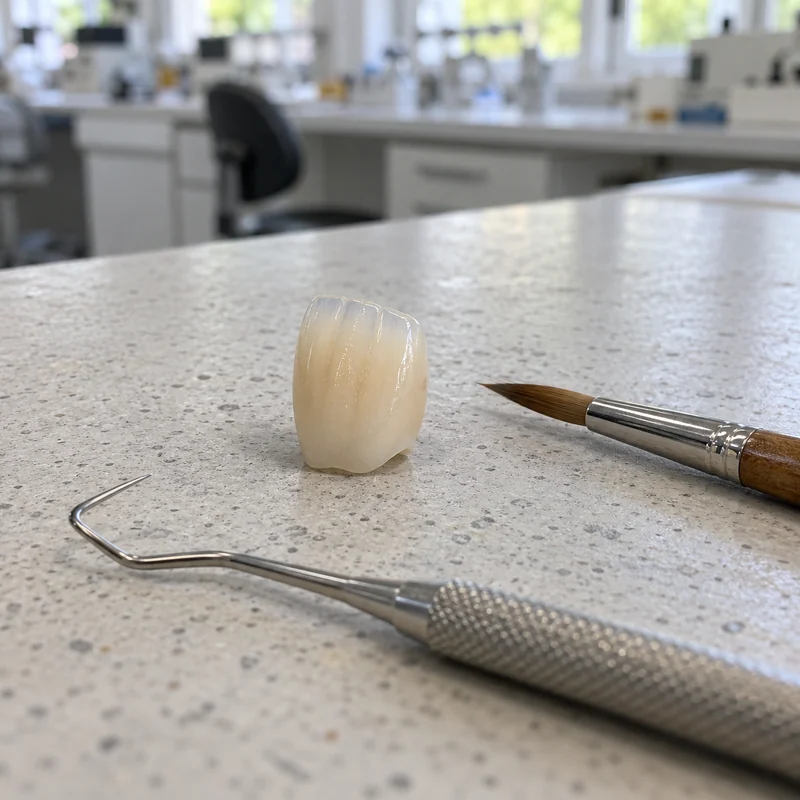 Layered zirconiaPorcelain built over a zirconia core
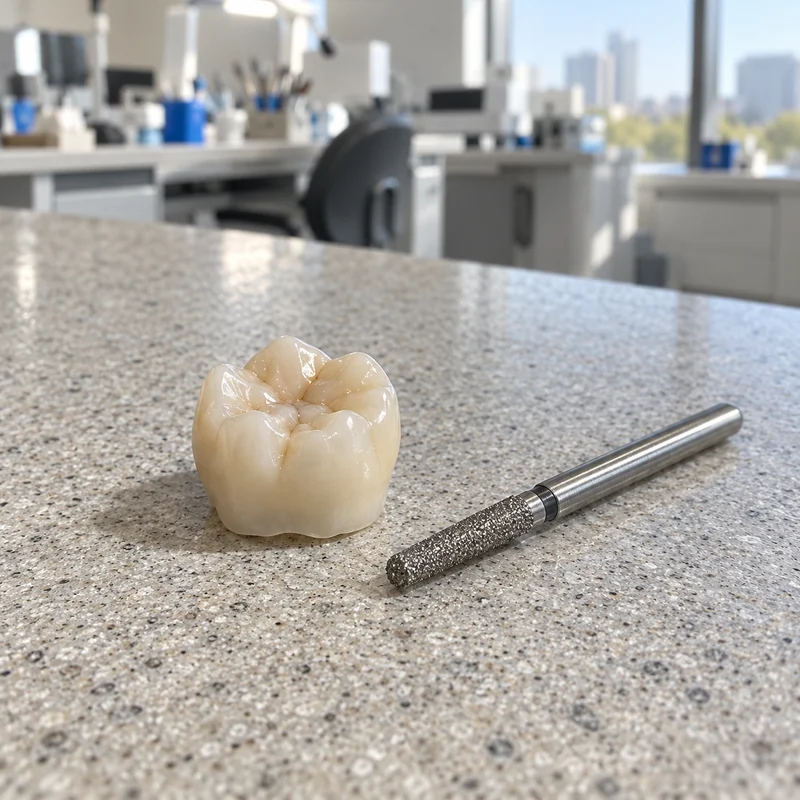 Aesthetic zirconiaOne solid piece of pre-shaded zirconia
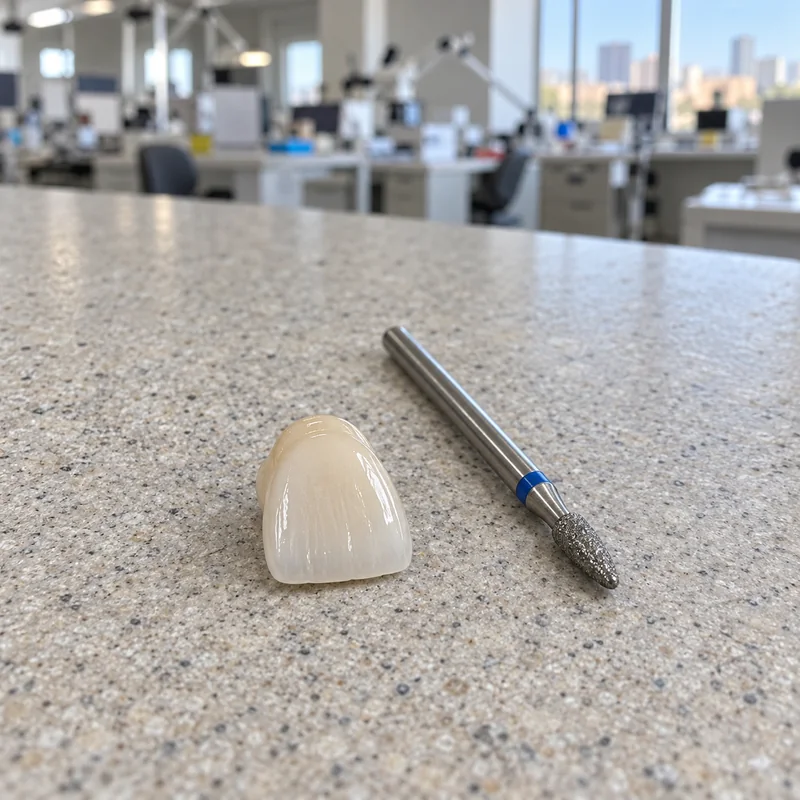 IPS e.maxLithium disilicate glass-ceramic in one piece, the most translucent of the five
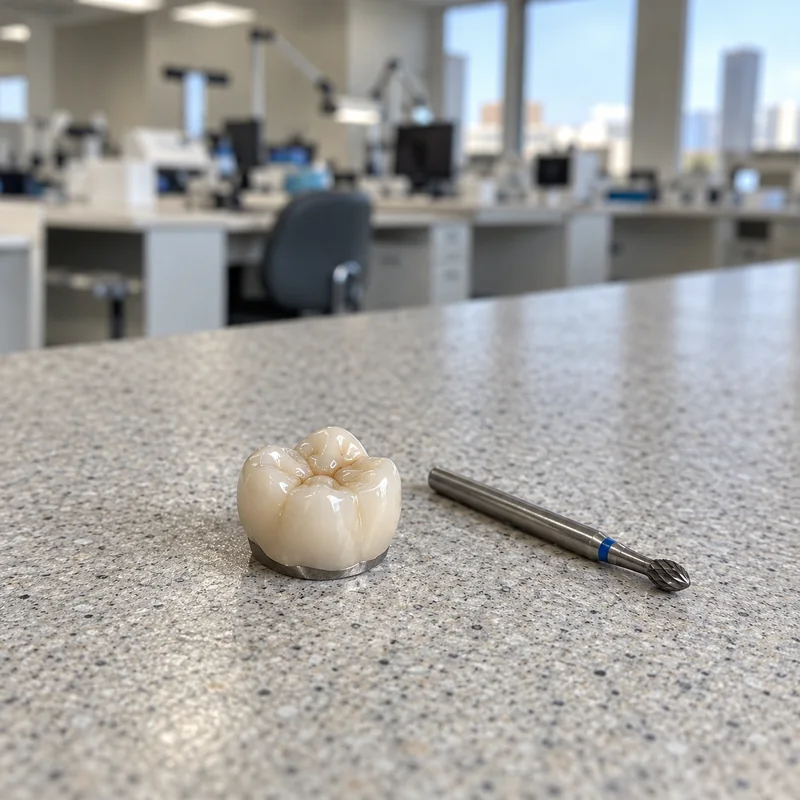 Porcelain fused to metalPorcelain over a metal coping, finished with a porcelain margin so no metal shows
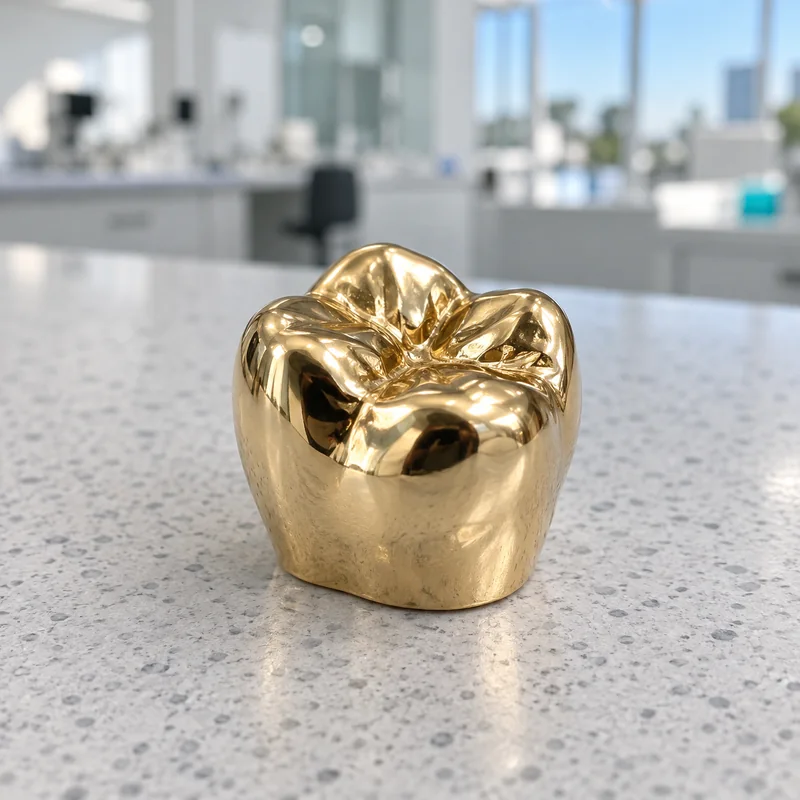 Full castSolid high noble alloy, polished
Layered zirconia
A zirconia framework milled from a solid block, with porcelain layered over it. The zirconia gives the restoration its strength; the porcelain gives it the depth, translucency and surface texture of natural enamel. Of the zirconia options, it is the most esthetic.
- Best for
- Anterior crowns and bridges where esthetics come first
- Built from
- A milled zirconia core with layered porcelain
- Esthetics
- Shade and translucency built up in the porcelain
Layered zirconiaPorcelain built over a zirconia core.
- Core
- Zirconia, about 1,000 to 1,200 MPa
- Layer
- Feldspathic porcelain, about 90 to 120 MPa: the weaker part, so heavy grinders do better in monolithic
- Reduction
- About 1.5 to 2 mm occlusal or incisal, 1.2 to 1.5 mm axial, room for the porcelain
- Margin
- Chamfer or rounded shoulder
- Cement
- Resin-modified glass ionomer, or resin after air abrasion and an MDP primer. Never etch zirconia
- Bridges
- Posterior connectors of about 9 mm² or more
- Watch for
- Chipping of the porcelain on bruxers
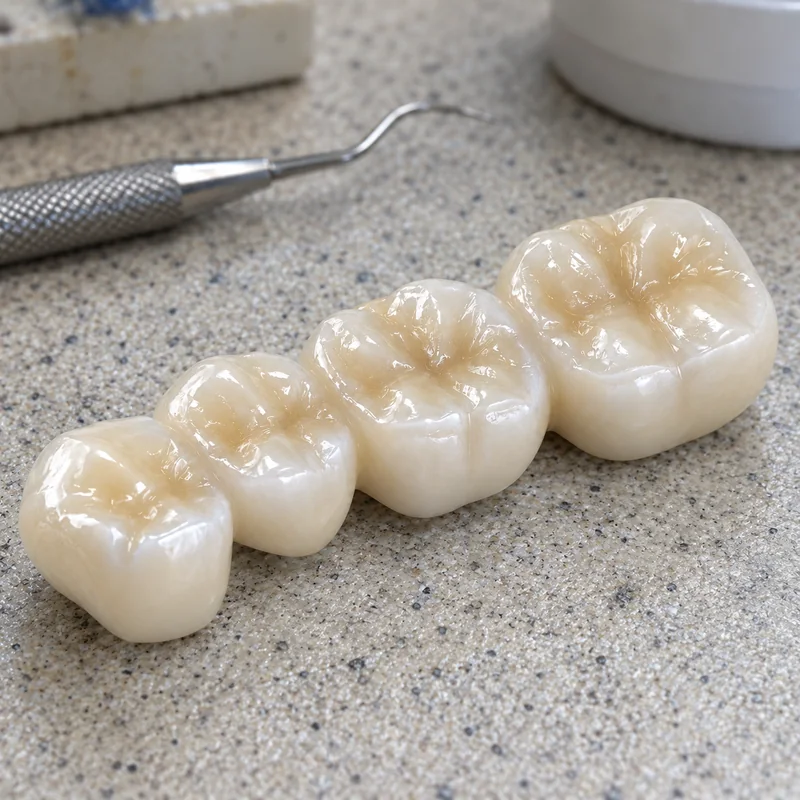 One framework
The bridge starts as one milled zirconia framework, so the connectors are part of the core. Porcelain is built up over each unit.
- Core
- Zirconia, about 1,000 to 1,200 MPa
- Layer
- Feldspathic porcelain, about 90 to 120 MPa: the weaker part, so heavy grinders do better in monolithic
- Reduction
- About 1.5 to 2 mm occlusal or incisal, 1.2 to 1.5 mm axial, room for the porcelain
- Margin
- Chamfer or rounded shoulder
- Cement
- Resin-modified glass ionomer, or resin after air abrasion and an MDP primer. Never etch zirconia
- Bridges
- Posterior connectors of about 9 mm² or more
- Watch for
- Chipping of the porcelain on bruxers
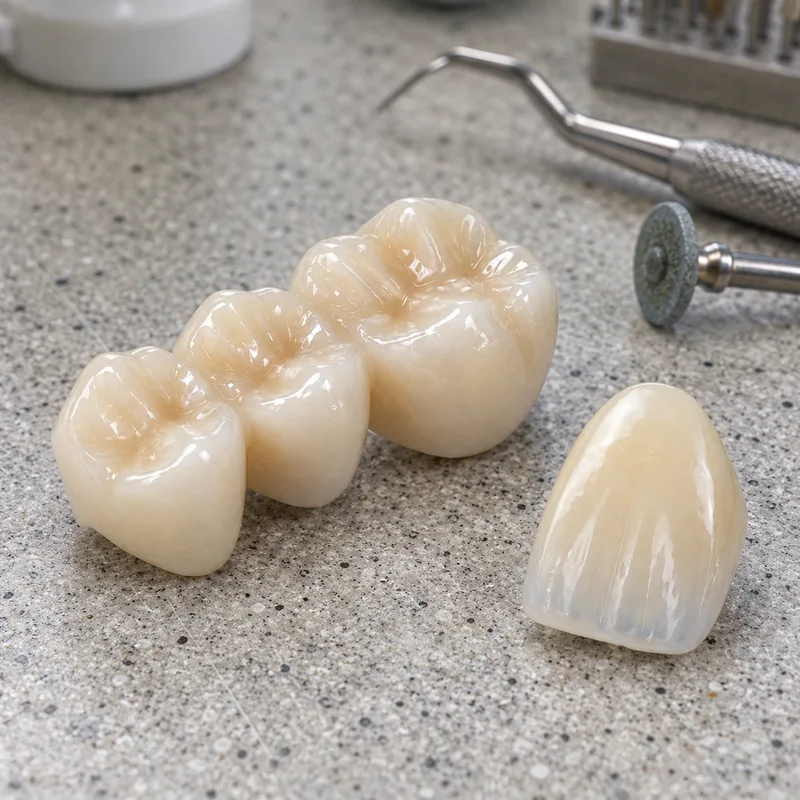 Why layer it
Porcelain is shaded in layers, from dentin to a translucent incisal edge, which one block cannot match on a front tooth.
- Core
- Zirconia, about 1,000 to 1,200 MPa
- Layer
- Feldspathic porcelain, about 90 to 120 MPa: the weaker part, so heavy grinders do better in monolithic
- Reduction
- About 1.5 to 2 mm occlusal or incisal, 1.2 to 1.5 mm axial, room for the porcelain
- Margin
- Chamfer or rounded shoulder
- Cement
- Resin-modified glass ionomer, or resin after air abrasion and an MDP primer. Never etch zirconia
- Bridges
- Posterior connectors of about 9 mm² or more
- Watch for
- Chipping of the porcelain on bruxers
Aesthetic zirconia
Milled in one piece from a pre-shaded zirconia block, then sintered, stained and glazed. The shade is built into the block, so results stay consistent from case to case, and with no porcelain layer there is nothing to chip.
- Best for
- Almost all crowns and bridges, anterior and posterior
- Built from
- Monolithic zirconia, in one piece
- Esthetics
- Very high, from the pre-shaded block, stain and glaze
Aesthetic zirconiaOne solid piece of pre-shaded zirconia.
- Material
- Pre-shaded multilayer zirconia
- Strength
- About 600 MPa for the most translucent grades up to about 1,200 MPa for the strongest
- Reduction
- As little as 0.5 to 1 mm axial and about 1 mm occlusal
- Margin
- Chamfer, or a feather edge where space is short
- Cement
- Glass ionomer, resin-modified glass ionomer, or resin after air abrasion and an MDP primer
- Good for
- Bruxers, limited space, implant crowns, long posterior bridges
- Adjusting
- Polish any adjusted surface: rough zirconia wears the opposing teeth
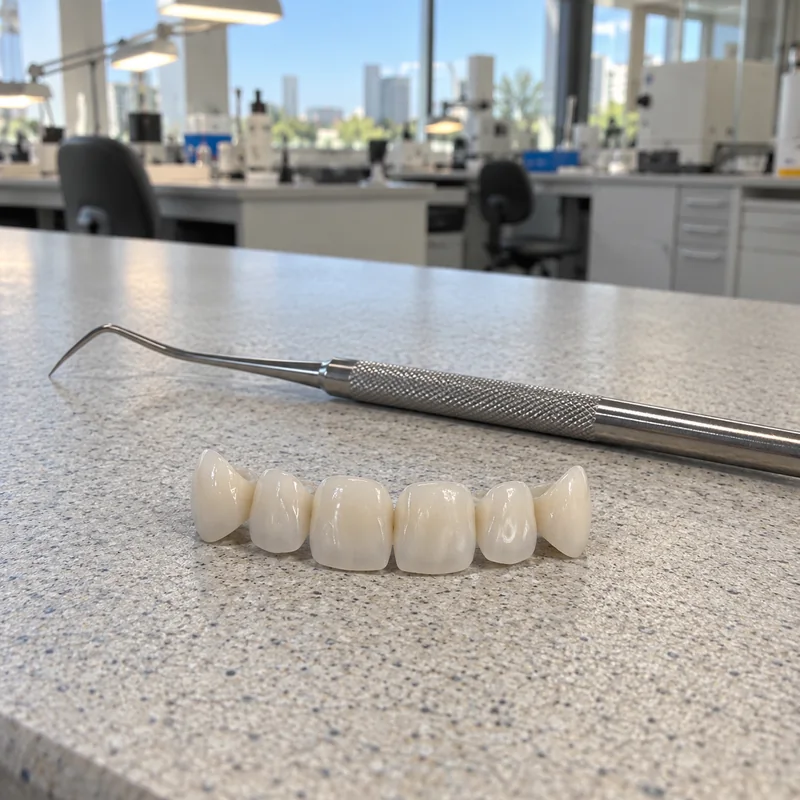 In one piece
Each unit is milled whole from the block, so there is no porcelain layer that can chip or come away over time.
- Material
- Pre-shaded multilayer zirconia
- Strength
- About 600 MPa for the most translucent grades up to about 1,200 MPa for the strongest
- Reduction
- As little as 0.5 to 1 mm axial and about 1 mm occlusal
- Margin
- Chamfer, or a feather edge where space is short
- Cement
- Glass ionomer, resin-modified glass ionomer, or resin after air abrasion and an MDP primer
- Good for
- Bruxers, limited space, implant crowns, long posterior bridges
- Adjusting
- Polish any adjusted surface: rough zirconia wears the opposing teeth
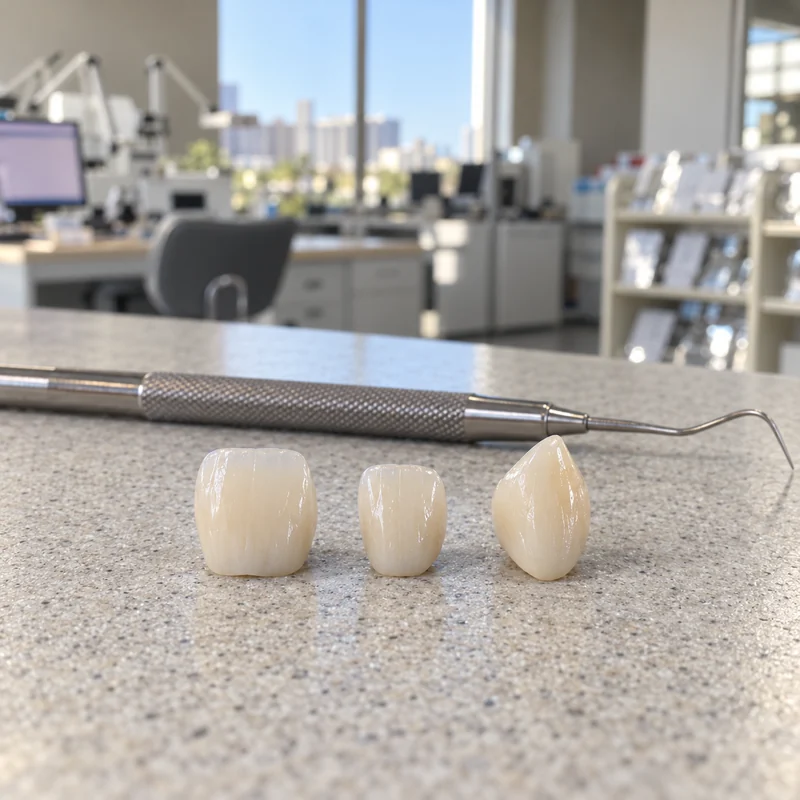 Consistent shade
The color is in the material itself. Surface stain and glaze add the final characterization, so a remake matches the original.
- Material
- Pre-shaded multilayer zirconia
- Strength
- About 600 MPa for the most translucent grades up to about 1,200 MPa for the strongest
- Reduction
- As little as 0.5 to 1 mm axial and about 1 mm occlusal
- Margin
- Chamfer, or a feather edge where space is short
- Cement
- Glass ionomer, resin-modified glass ionomer, or resin after air abrasion and an MDP primer
- Good for
- Bruxers, limited space, implant crowns, long posterior bridges
- Adjusting
- Polish any adjusted surface: rough zirconia wears the opposing teeth
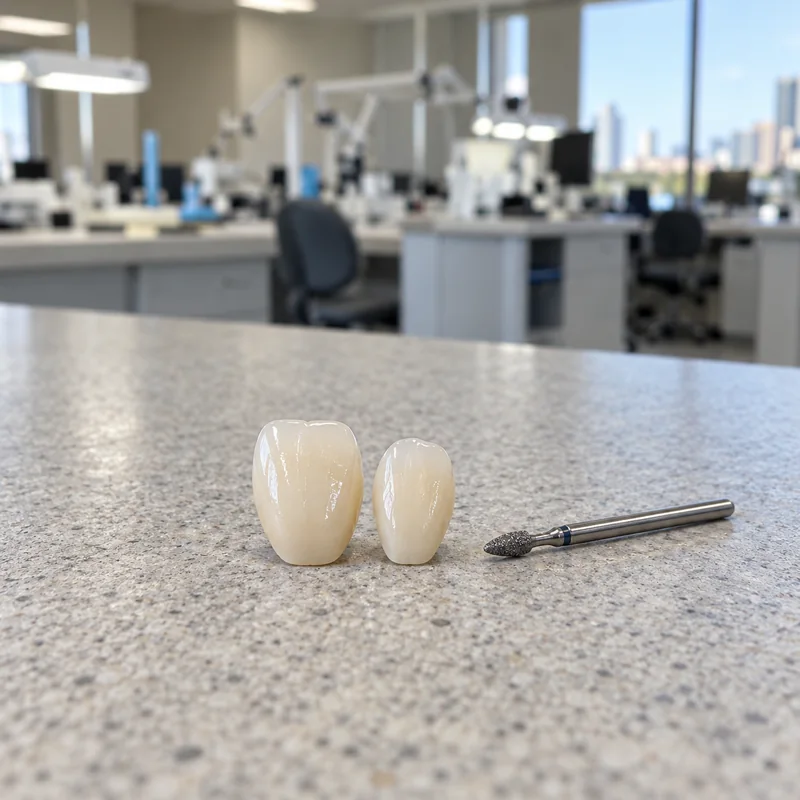 Where it fits
The strength of zirconia with very high esthetics, for almost all restorations, from single anterior crowns to posterior bridges.
- Material
- Pre-shaded multilayer zirconia
- Strength
- About 600 MPa for the most translucent grades up to about 1,200 MPa for the strongest
- Reduction
- As little as 0.5 to 1 mm axial and about 1 mm occlusal
- Margin
- Chamfer, or a feather edge where space is short
- Cement
- Glass ionomer, resin-modified glass ionomer, or resin after air abrasion and an MDP primer
- Good for
- Bruxers, limited space, implant crowns, long posterior bridges
- Adjusting
- Polish any adjusted surface: rough zirconia wears the opposing teeth
IPS e.max
IPS e.max is lithium disilicate, a glass-ceramic made by Ivoclar, either pressed or milled, in low or high translucency. It is highly esthetic and lets light through like enamel, which is also why the color of the prepared tooth shows through: the lab needs the stump shade.
- Best for
- Anterior cases and single units
- Translucency
- Low (LT) or high (HT)
- Send
- The stump shade with the case shade
IPS e.maxLithium disilicate glass-ceramic in one piece, the most translucent of the five.
- Material
- Lithium disilicate glass-ceramic (Ivoclar)
- Strength
- About 470 MPa pressed, 530 MPa milled, per Ivoclar
- Reduction
- At least 1 mm axial and 1.5 mm occlusal or incisal
- Margin
- Rounded shoulder or deep chamfer, no bevels
- Cement
- Adhesive or self-adhesive resin; etch with hydrofluoric acid, then silane
- Bridges
- Three units, as far back as the second premolar
- Translucency
- HT, MT or LT, chosen from the stump shade
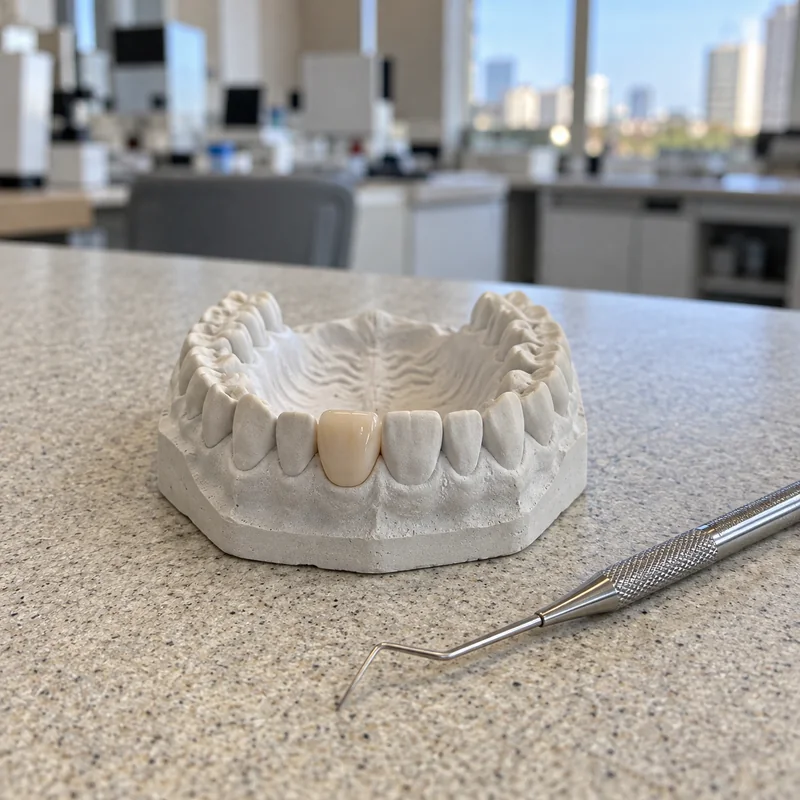 Why the stump shade
e.max is translucent, so the prepared tooth changes the final color. The stump shade lets the lab choose the right translucency.
- Material
- Lithium disilicate glass-ceramic (Ivoclar)
- Strength
- About 470 MPa pressed, 530 MPa milled, per Ivoclar
- Reduction
- At least 1 mm axial and 1.5 mm occlusal or incisal
- Margin
- Rounded shoulder or deep chamfer, no bevels
- Cement
- Adhesive or self-adhesive resin; etch with hydrofluoric acid, then silane
- Bridges
- Three units, as far back as the second premolar
- Translucency
- HT, MT or LT, chosen from the stump shade
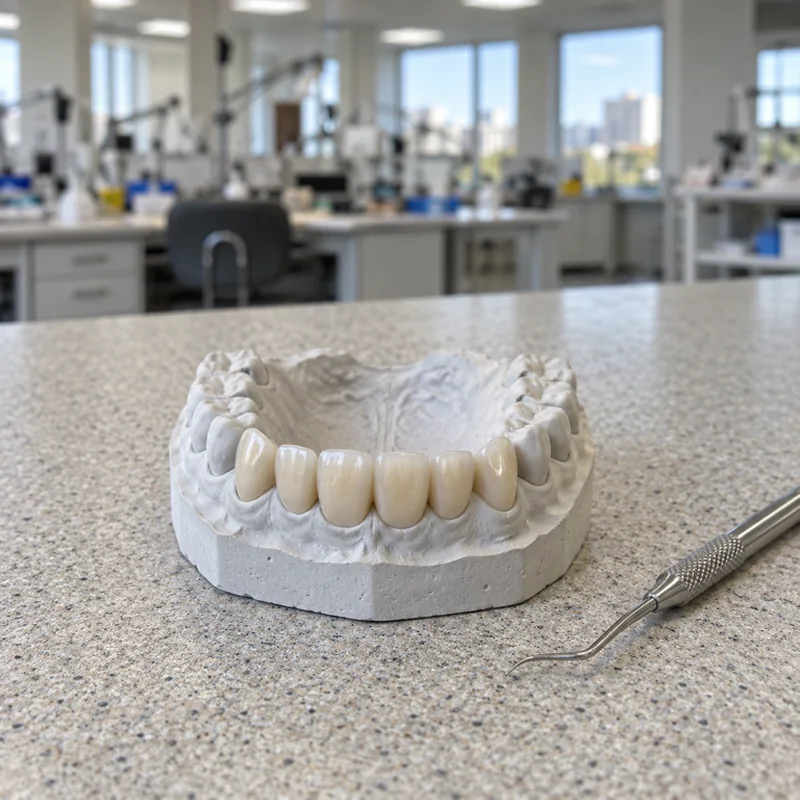 Pressed or milled
Pressed e.max is formed from an ingot in a press furnace; milled e.max is cut from a block, then crystallized.
- Material
- Lithium disilicate glass-ceramic (Ivoclar)
- Strength
- About 470 MPa pressed, 530 MPa milled, per Ivoclar
- Reduction
- At least 1 mm axial and 1.5 mm occlusal or incisal
- Margin
- Rounded shoulder or deep chamfer, no bevels
- Cement
- Adhesive or self-adhesive resin; etch with hydrofluoric acid, then silane
- Bridges
- Three units, as far back as the second premolar
- Translucency
- HT, MT or LT, chosen from the stump shade
Porcelain fused to metal
A metal coping made to fit the prepared tooth, with porcelain fused over it in layers. Once the gold standard for crowns and bridges, it has largely given way to all-ceramic materials, but it is still the right choice when a dark tooth, post or core needs to be masked.
- Alloys
- Base alloy (NP), noble, high noble white or high noble yellow
- Best for
- Masking color from the tooth underneath
- Send
- A model is needed
Porcelain fused to metalPorcelain over a metal coping, finished with a porcelain margin so no metal shows.
- Build
- A cast metal coping, opaque, then dentin and enamel porcelain
- Reduction
- 1.5 to 2 mm occlusal, 1.2 to 1.5 mm facial, 0.5 mm where only metal shows
- Margin
- Porcelain margin on a shoulder so no metal shows, or a thin metal collar where strength comes first
- Cement
- Conventional: zinc phosphate, glass ionomer or resin-modified glass ionomer
- Good for
- Masking dark teeth, posts and cores; long-span bridges
- Alloys
- Base alloy (NP), noble, high noble white or high noble yellow
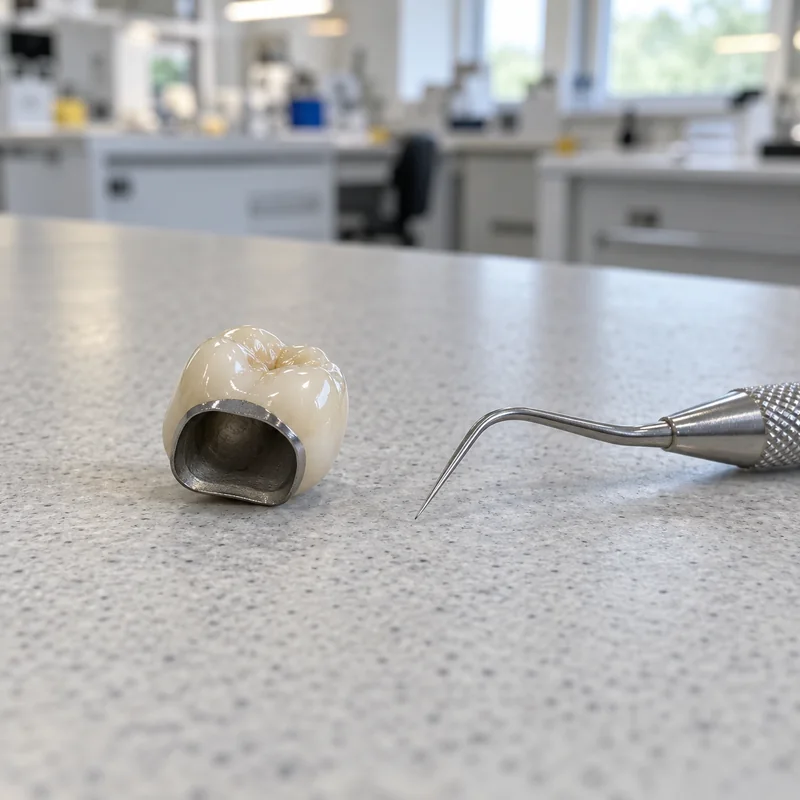 Inside a PFM
The dark layer is the metal coping. Opaque porcelain masks it, then dentin and enamel porcelains build the color.
- Build
- A cast metal coping, opaque, then dentin and enamel porcelain
- Reduction
- 1.5 to 2 mm occlusal, 1.2 to 1.5 mm facial, 0.5 mm where only metal shows
- Margin
- Porcelain margin on a shoulder so no metal shows, or a thin metal collar where strength comes first
- Cement
- Conventional: zinc phosphate, glass ionomer or resin-modified glass ionomer
- Good for
- Masking dark teeth, posts and cores; long-span bridges
- Alloys
- Base alloy (NP), noble, high noble white or high noble yellow
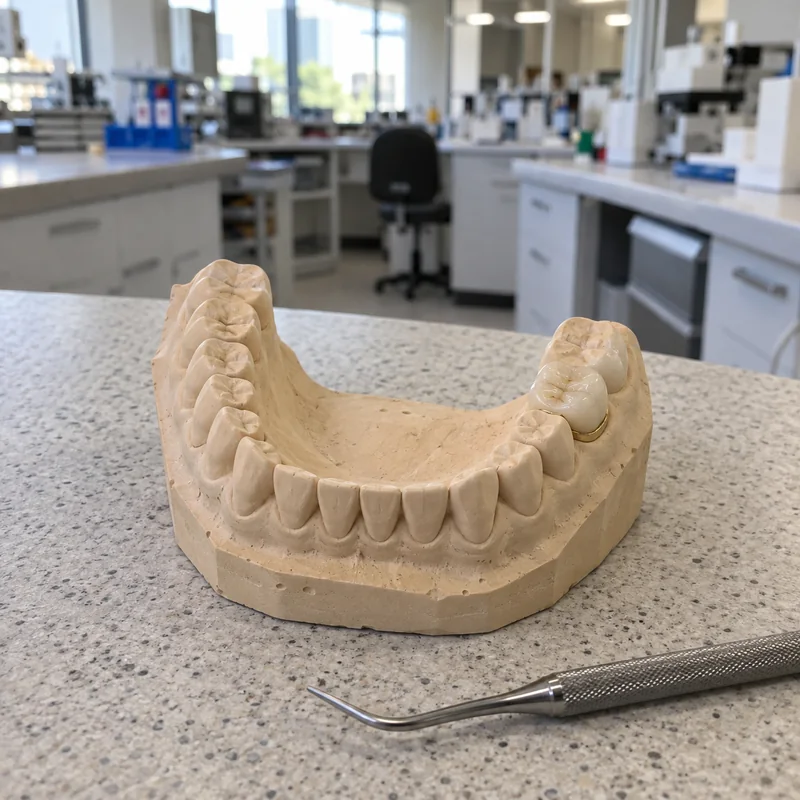 Why a model
A PFM is built and fitted on the model, with the margins checked there before the porcelain goes on.
- Build
- A cast metal coping, opaque, then dentin and enamel porcelain
- Reduction
- 1.5 to 2 mm occlusal, 1.2 to 1.5 mm facial, 0.5 mm where only metal shows
- Margin
- Porcelain margin on a shoulder so no metal shows, or a thin metal collar where strength comes first
- Cement
- Conventional: zinc phosphate, glass ionomer or resin-modified glass ionomer
- Good for
- Masking dark teeth, posts and cores; long-span bridges
- Alloys
- Base alloy (NP), noble, high noble white or high noble yellow
Full cast
Cast entirely in metal, base or noble alloy. One of the original restorations, it has stood the test of time for durability and longevity. It needs the least tooth reduction of any crown, and it is gentle on the opposing and neighboring teeth.
- Alloys
- Base alloy (NP), noble, high noble white or high noble yellow
- Best for
- Bruxism and minimal space, mostly molars
- Send
- No model needed
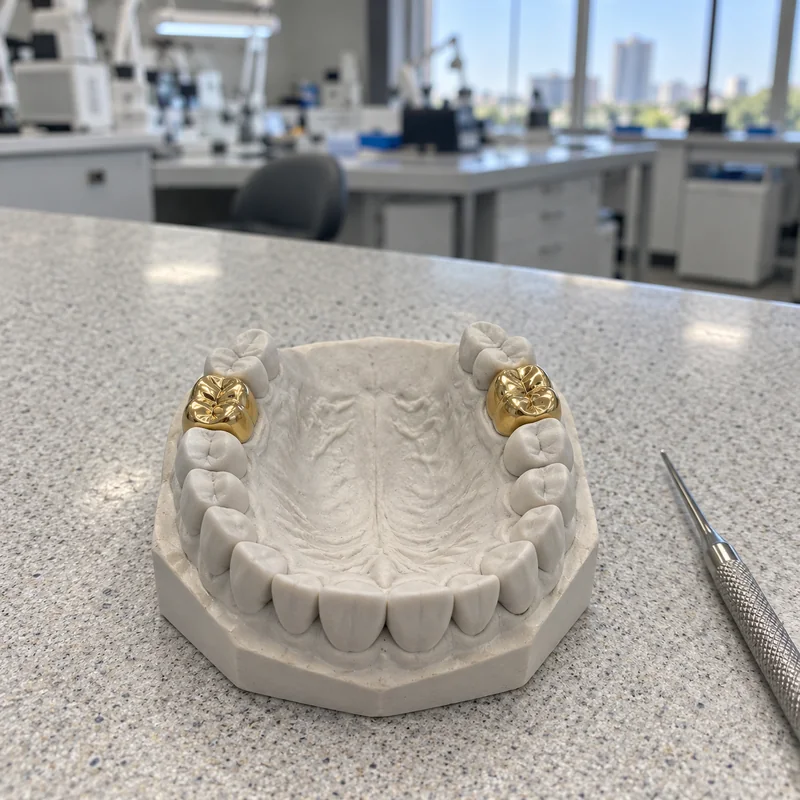
Full castSolid high noble alloy, polished.
- Material
- Cast base, noble or high noble alloy
- Reduction
- The least of any crown: about 1 to 1.5 mm occlusal, 0.5 mm axial
- Margin
- Chamfer or feather edge
- Cement
- Conventional: zinc phosphate, glass ionomer or resin-modified glass ionomer
- Good for
- Second molars, short clinical crowns, bruxers
- Wear
- High noble gold wears much like enamel and polishes well
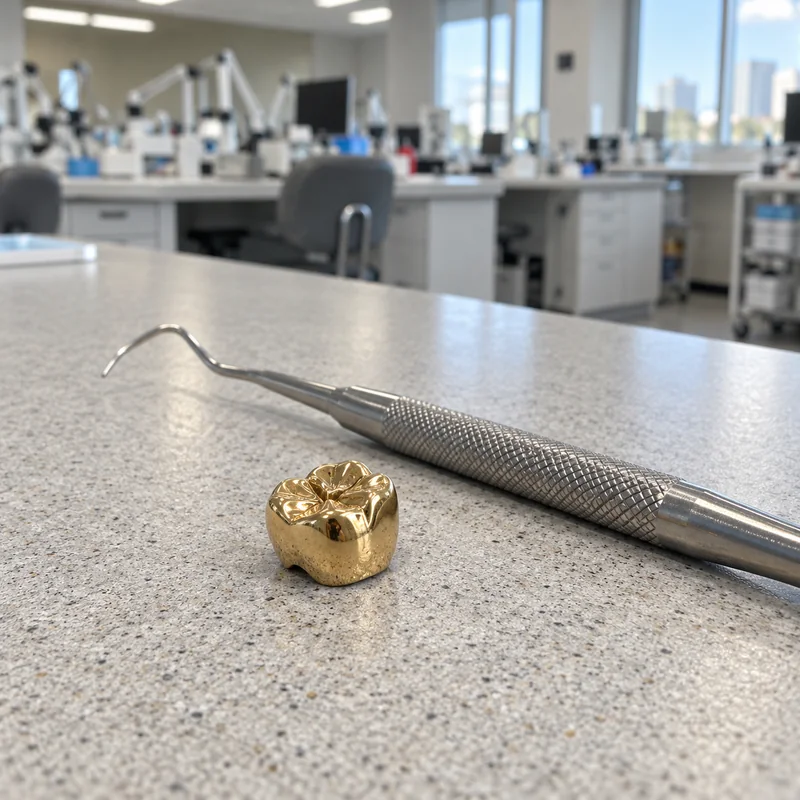 Alloy classes
High noble: at least 60 percent noble metal, including 40 percent gold. Noble: at least 25 percent. Base: under 25.
- Material
- Cast base, noble or high noble alloy
- Reduction
- The least of any crown: about 1 to 1.5 mm occlusal, 0.5 mm axial
- Margin
- Chamfer or feather edge
- Cement
- Conventional: zinc phosphate, glass ionomer or resin-modified glass ionomer
- Good for
- Second molars, short clinical crowns, bruxers
- Wear
- High noble gold wears much like enamel and polishes well
 Kind to the bite
Polished cast metal is gentle on opposing teeth, and gold alloys wear close to enamel: good for patients who grind.
- Material
- Cast base, noble or high noble alloy
- Reduction
- The least of any crown: about 1 to 1.5 mm occlusal, 0.5 mm axial
- Margin
- Chamfer or feather edge
- Cement
- Conventional: zinc phosphate, glass ionomer or resin-modified glass ionomer
- Good for
- Second molars, short clinical crowns, bruxers
- Wear
- High noble gold wears much like enamel and polishes well
What to send
- A scan or impression, with the opposing arch and bite
- The completed Rx form with the shade, and the stump shade for e.max
- For bridges, the pontic design you want
Turnaround: 10 business days from the day the lab receives the case, 13 for complex cases.
Talk to the lab first
Not sure which material suits the case, or need a rush crown? Call (305) 940-4040, or send the lab a message.
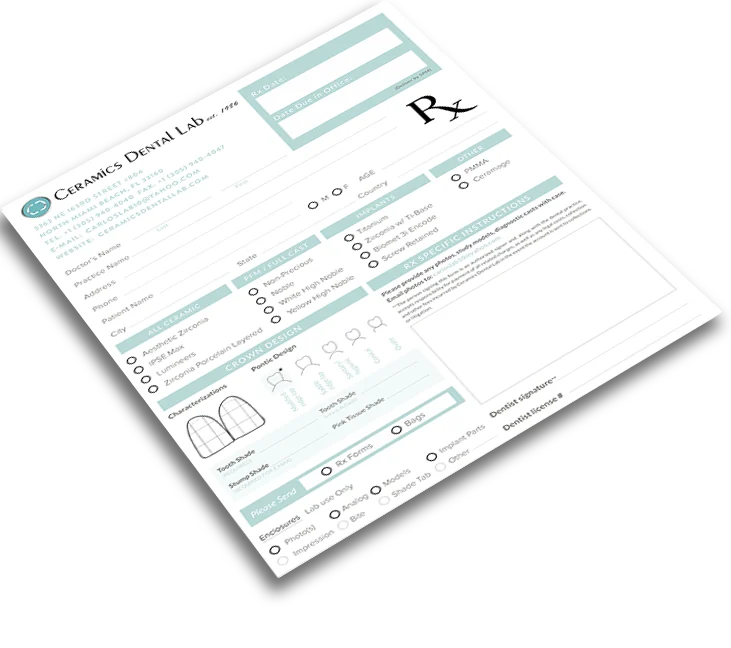
Send your case to Ceramics Dental Lab
We accept conventional impressions, and digital files from most intraoral scanners.