
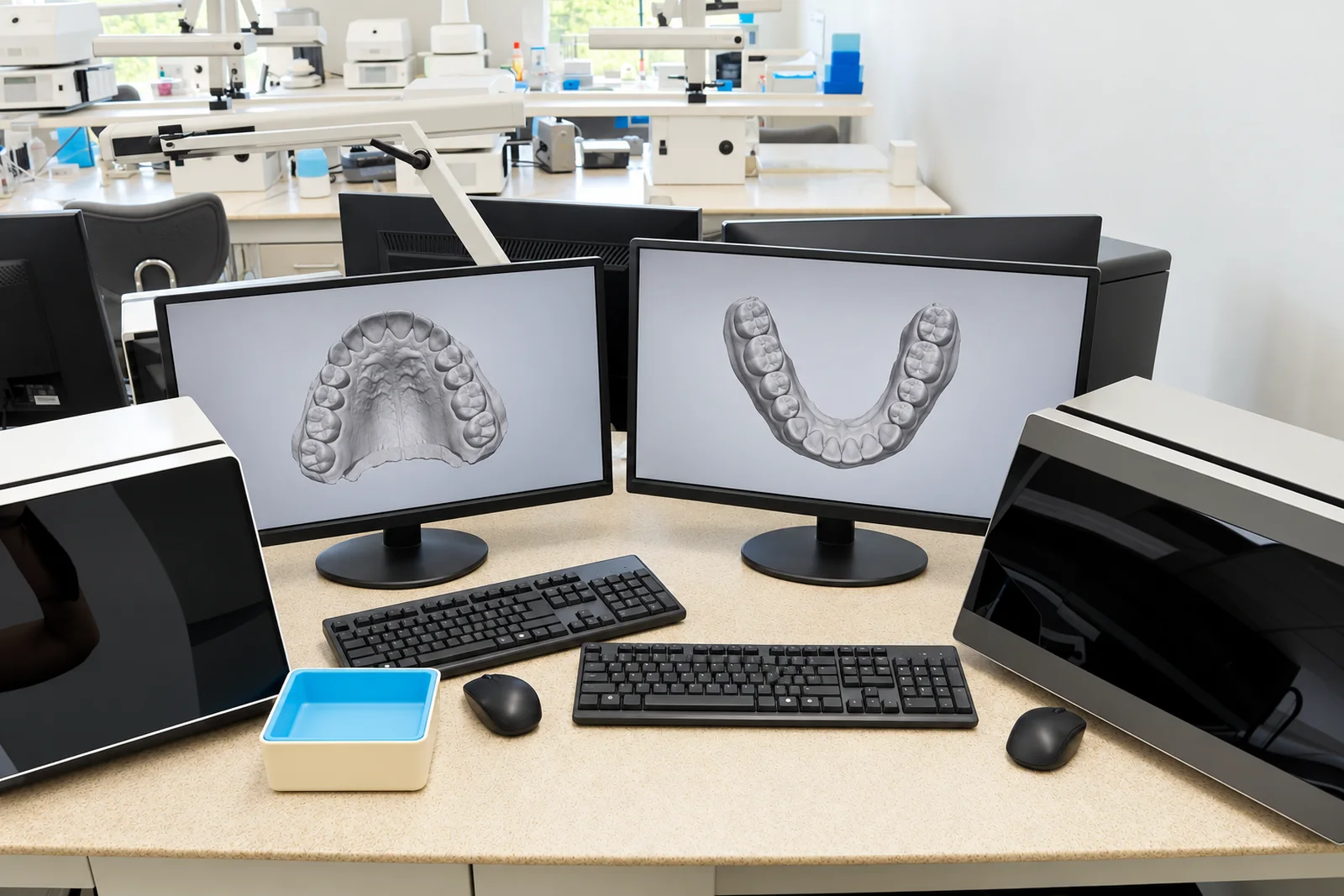
Implants
Full arches and hybrids, custom abutments and screw-retained crowns.
The parts of an implant restoration
- CrownZirconia, IPS e.max or porcelain. Made by the lab.
- ScrewHolds the abutment, or a screw-retained crown, to the implant.
- AbutmentStock, or custom titanium or zirconia, designed for the site. Made by the lab.
- ImplantPlaced by the dentist. The lab works to its system and platform.
A recent case
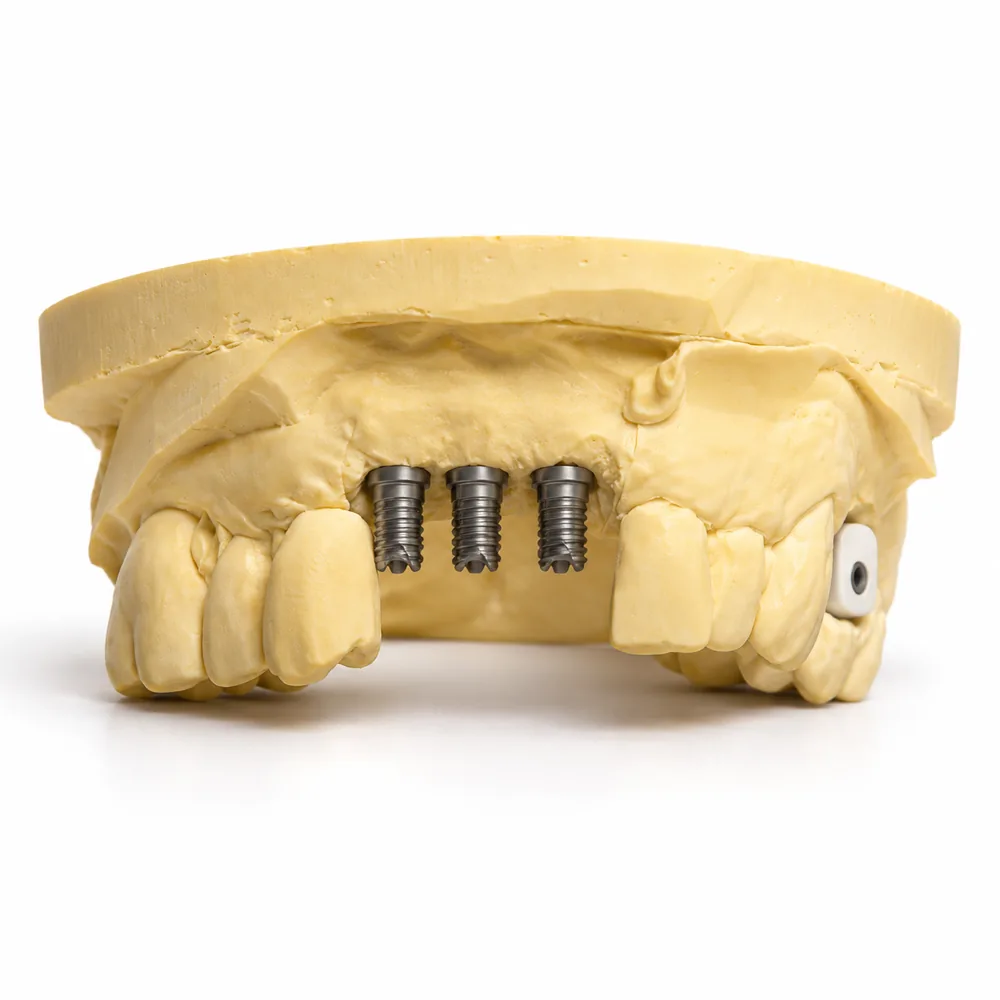
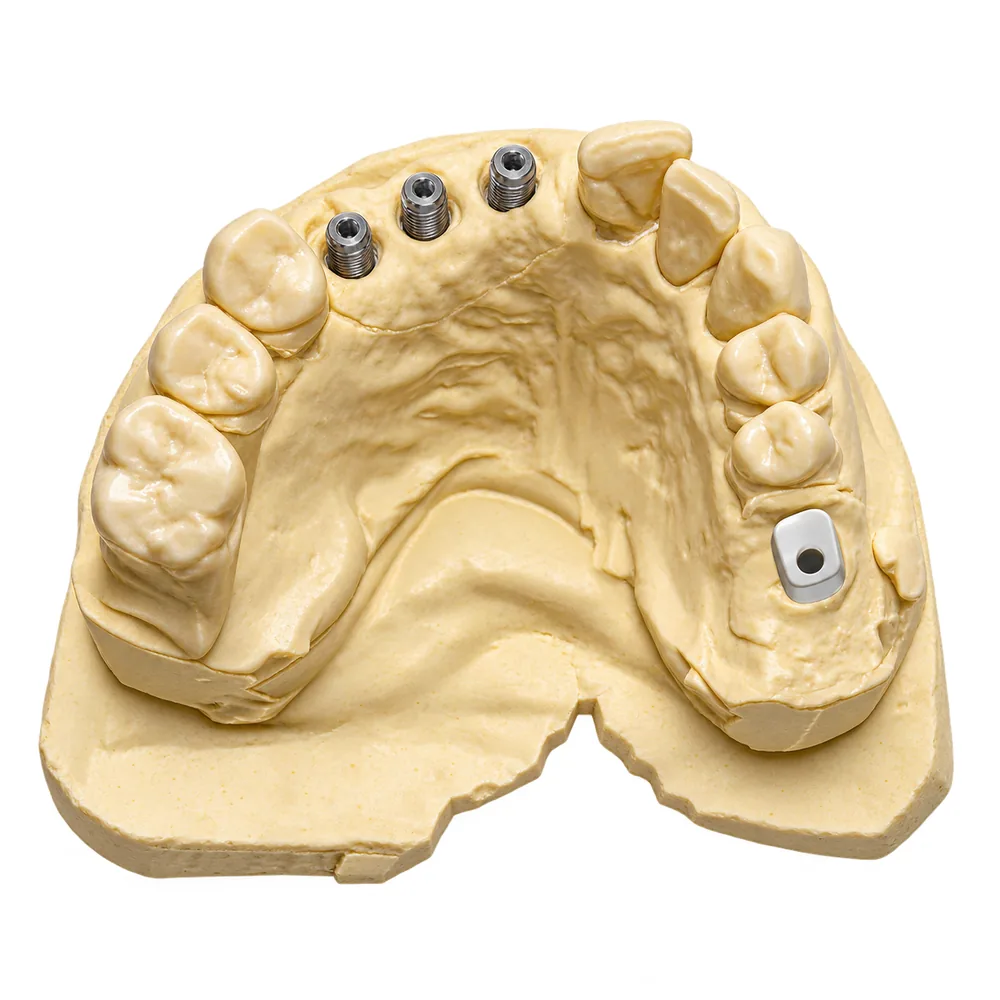
A three-unit implant bridge in the upper front. The analogs in the model show where each implant sits, so the bridge fits the implants, not just the teeth.
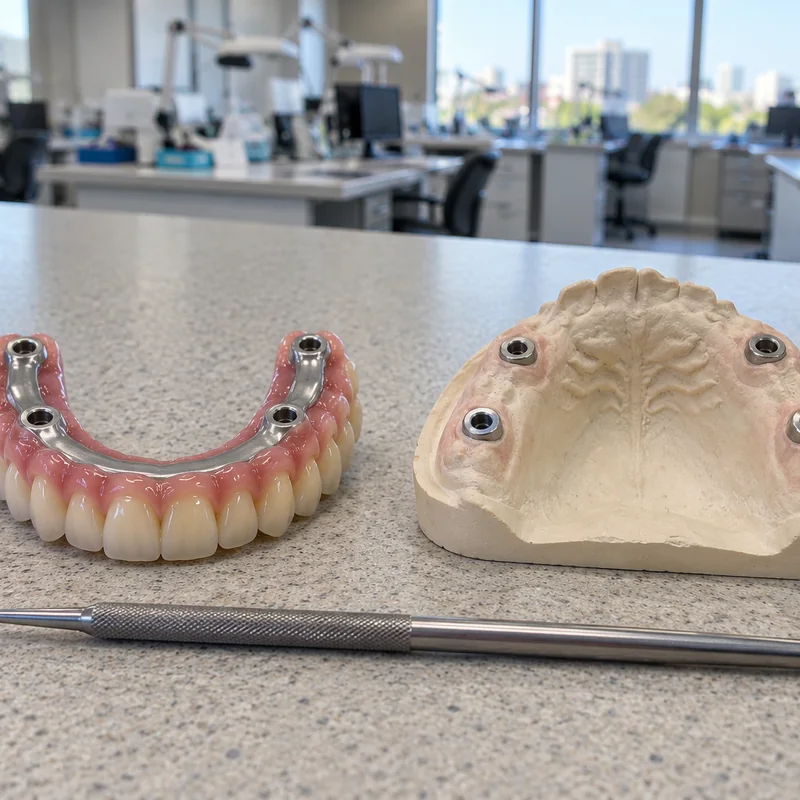
Hybrid dentures
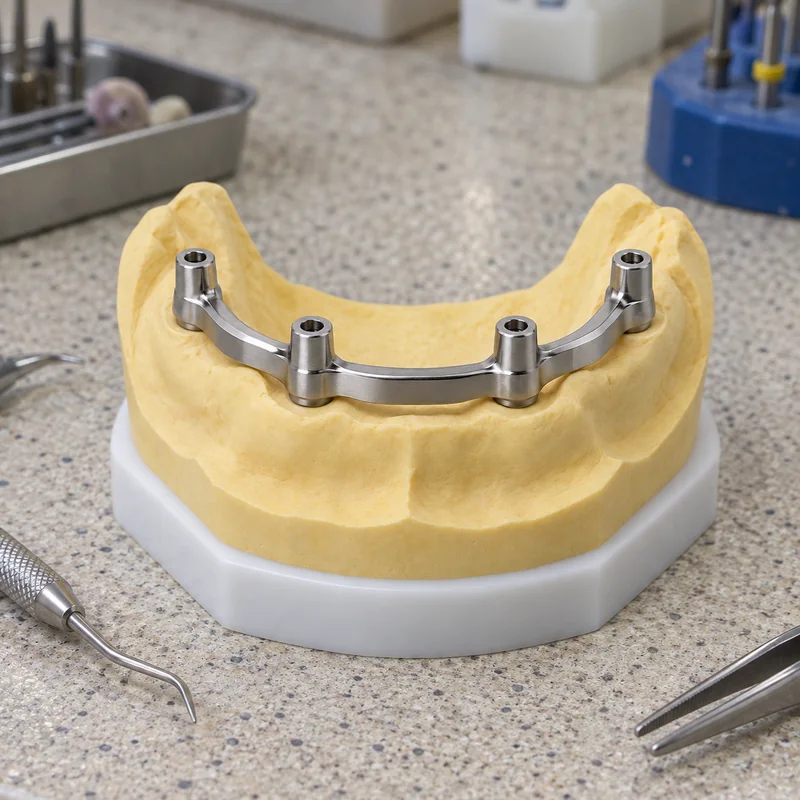
Zirconia teeth on a CAD/CAM titanium bar, screwed to the implants as one full-arch restoration. The bar can last for life or be repaired with laser welding, and the zirconia teeth resist wear with less risk of shearing.
- Best for
- Full-arch restorations on implants
- Built from
- Zirconia teeth on a titanium bar
- Repairs
- The bar can be laser welded
 The bar
A titanium bar can last for life, or be repaired with laser welding.
- Build
- Zirconia teeth on a CAD/CAM titanium bar
- Implants
- Usually four to six
- Space
- About 12 to 15 mm of restorative space from bone to bite
- Retention
- Screwed to the implants, removed only by the dentist
- Hygiene
- The patient cleans under it with floss threaders or a water flosser; recall every few months
- Repairs
- The bar can be laser welded
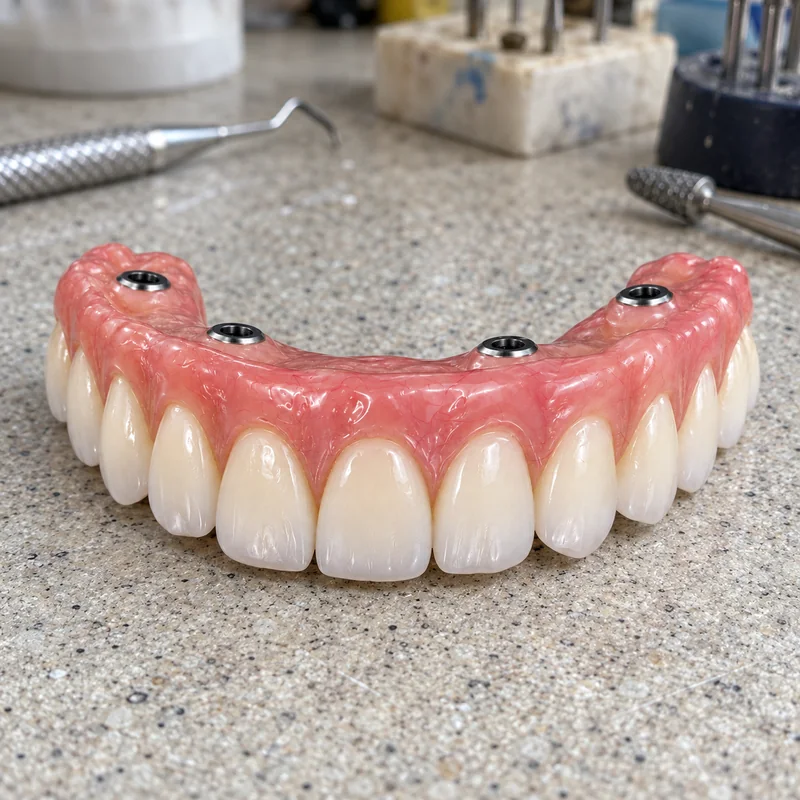
 Why choose it
Better wear resistance and less risk of teeth shearing, and less rigid than a hybrid made entirely of zirconia.
- Build
- Zirconia teeth on a CAD/CAM titanium bar
- Implants
- Usually four to six
- Space
- About 12 to 15 mm of restorative space from bone to bite
- Retention
- Screwed to the implants, removed only by the dentist
- Hygiene
- The patient cleans under it with floss threaders or a water flosser; recall every few months
- Repairs
- The bar can be laser welded
 Angles
No extra angle correction is needed: the teeth can be cemented over the screw.
- Build
- Zirconia teeth on a CAD/CAM titanium bar
- Implants
- Usually four to six
- Space
- About 12 to 15 mm of restorative space from bone to bite
- Retention
- Screwed to the implants, removed only by the dentist
- Hygiene
- The patient cleans under it with floss threaders or a water flosser; recall every few months
- Repairs
- The bar can be laser welded
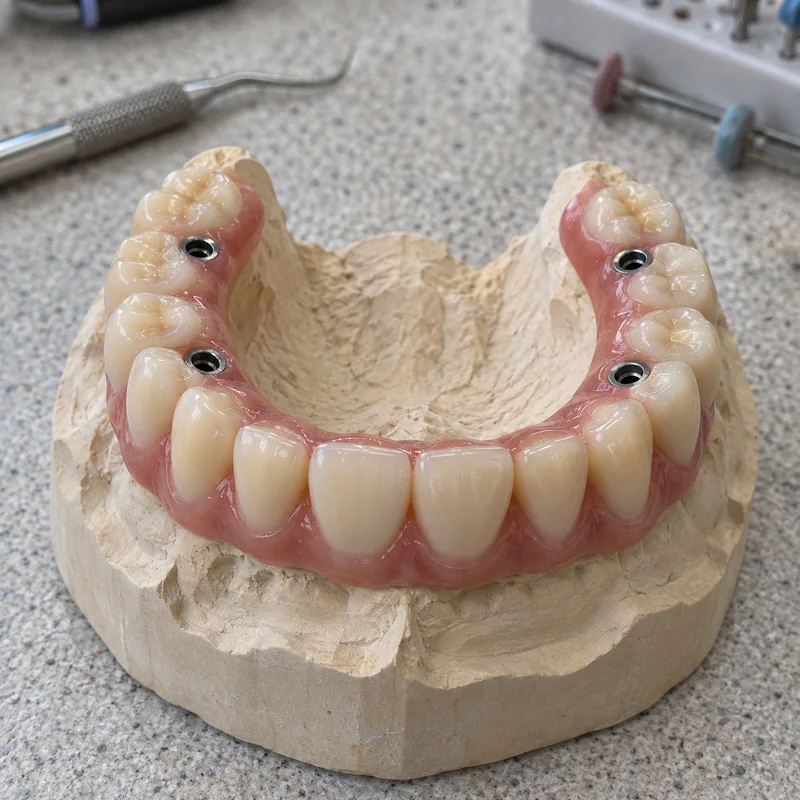 Fixed, not removable
A hybrid is screwed to its implants: a framework carrying denture teeth and pink acrylic that only the dentist removes.
- Build
- Zirconia teeth on a CAD/CAM titanium bar
- Implants
- Usually four to six
- Space
- About 12 to 15 mm of restorative space from bone to bite
- Retention
- Screwed to the implants, removed only by the dentist
- Hygiene
- The patient cleans under it with floss threaders or a water flosser; recall every few months
- Repairs
- The bar can be laser welded
PIC full arch
For immediate-load full arches: send the PIC photogrammetry file of the implant positions with an intraoral scan of the soft tissue, the opposing arch and the bite. We merge them in 3Shape and make a milled PMMA provisional, a printed reinforced provisional, or a titanium bar with PMMA.
- Best for
- All-on-4 and All-on-X cases that need a passive fit
- Provisionals
- Without a bar, back in a couple of days; a rush fee applies
- 1Capture
The PIC camera records the implant positions in 30 to 60 seconds, with no impression material.
- 2Scan
An intraoral scan of the soft tissue, the opposing arch and the bite.
- 3Merge and design
We merge both files and design the provisional in 3Shape.
- 4Mill or print
A milled PMMA provisional, a printed reinforced provisional, or a titanium bar with PMMA.
Stock abutments
Pre-made abutments from the implant maker, in standard sizes, straight or angled, for bone-level and tissue-level implants. They are usually cement-retained. Because they are made in advance, they lower the cost and shorten the time an implant case takes.
- Best for
- Posterior cases at a lower cost
- Not for
- The esthetic zone
- Retention
- Usually cemented
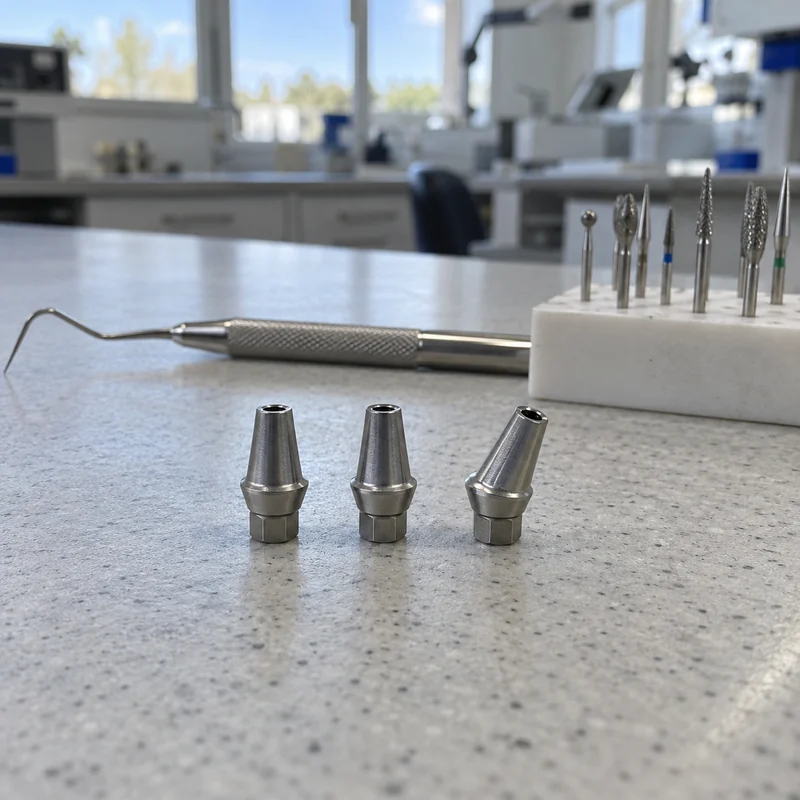 Where not to
Not for the esthetic zone: the tissue may not form to a stock shape, so emergence and tissue support are hard to match.
- Material
- Titanium, from the implant maker
- Shapes
- Straight or angled, in set heights and widths
- Retention
- The crown is cemented; clear all excess cement
- Screw
- Torque to the implant maker’s value
- Good for
- Posterior implants placed in a good position
- Not for
- Thin tissue or the esthetic zone, where the margin cannot follow the gum
Custom titanium abutments
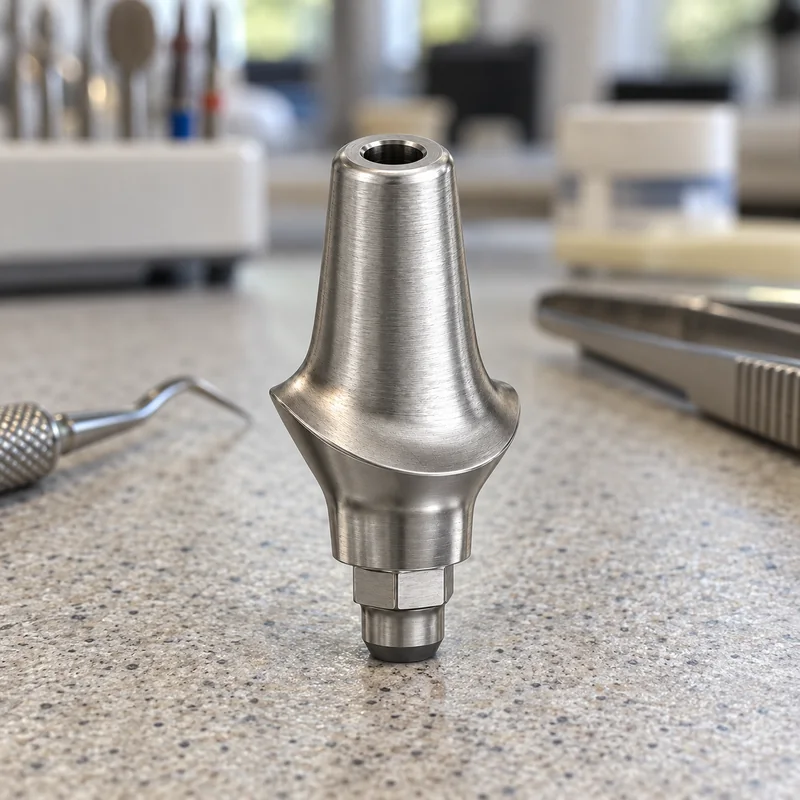
Designed and milled from titanium alloy to fit the crest of the patient’s tissue, then attached to the implant with a titanium screw. A custom shape supports the soft tissue and places the margin where the crown needs it.
- Best for
- Long-term strength and high stability
- Material
- Titanium alloy, biocompatible and corrosion-resistant
- Fixed with
- A titanium screw
 How it holds
A titanium screw attaches it to the implant. The custom collar follows the tissue, so the crown margin sits where it should.
- Material
- Titanium alloy (Ti-6Al-4V), milled
- Design
- Margin set about 0.5 to 1 mm under the tissue, following it all round
- Angle
- Corrects implant angle within the abutment
- Finish
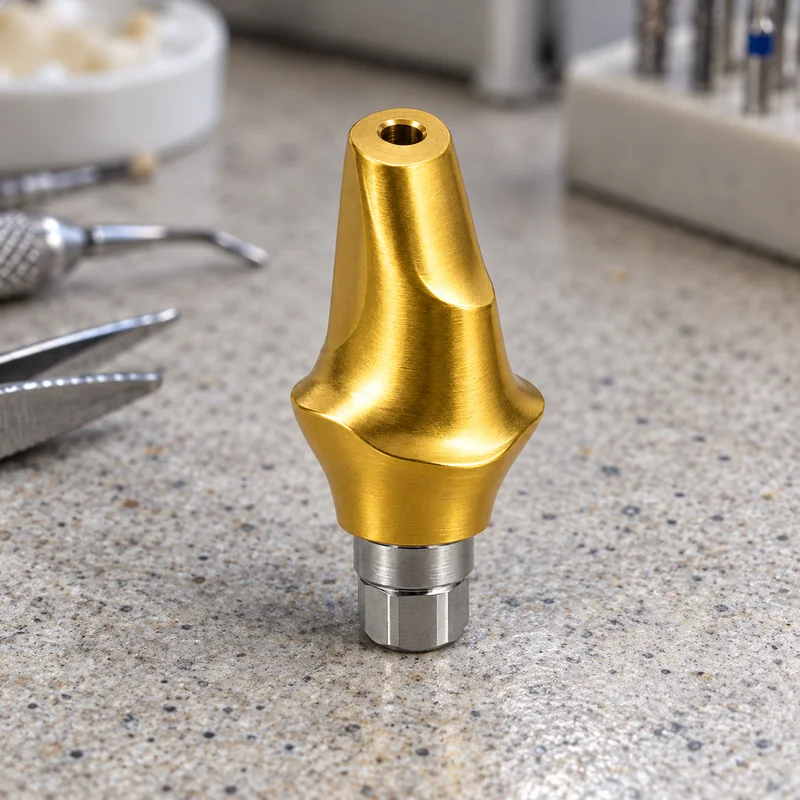
- Plain, or gold-tone titanium nitride for thin tissue
- Screw
- Titanium, torqued to the implant maker’s value
- Retention
- Crown cemented or screwed
 Why titanium
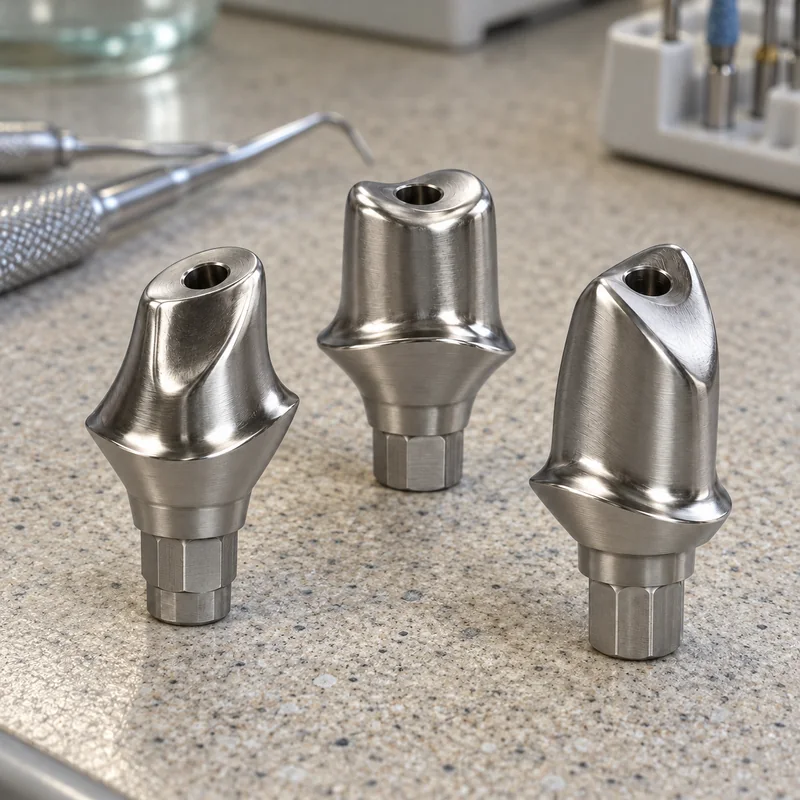
Long-term strength, high stability, excellent biocompatibility and resistance to corrosion.
- Material
- Titanium alloy (Ti-6Al-4V), milled
- Design
- Margin set about 0.5 to 1 mm under the tissue, following it all round
- Angle
- Corrects implant angle within the abutment
- Finish
- Plain, or gold-tone titanium nitride for thin tissue
- Screw
- Titanium, torqued to the implant maker’s value
- Retention
- Crown cemented or screwed
 Gold-tone
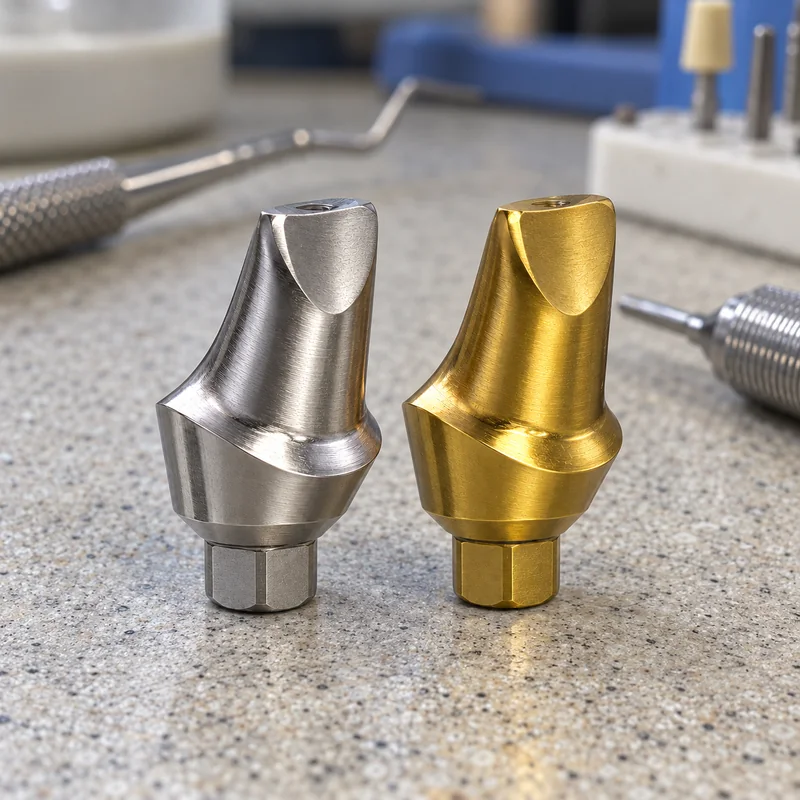
A gold-colored titanium nitride surface warms the color under thin tissue. Ask the lab whether it suits your implant system.
- Material
- Titanium alloy (Ti-6Al-4V), milled
- Design
- Margin set about 0.5 to 1 mm under the tissue, following it all round
- Angle
- Corrects implant angle within the abutment
- Finish
- Plain, or gold-tone titanium nitride for thin tissue
- Screw
- Titanium, torqued to the implant maker’s value
- Retention
- Crown cemented or screwed
Custom zirconia abutments
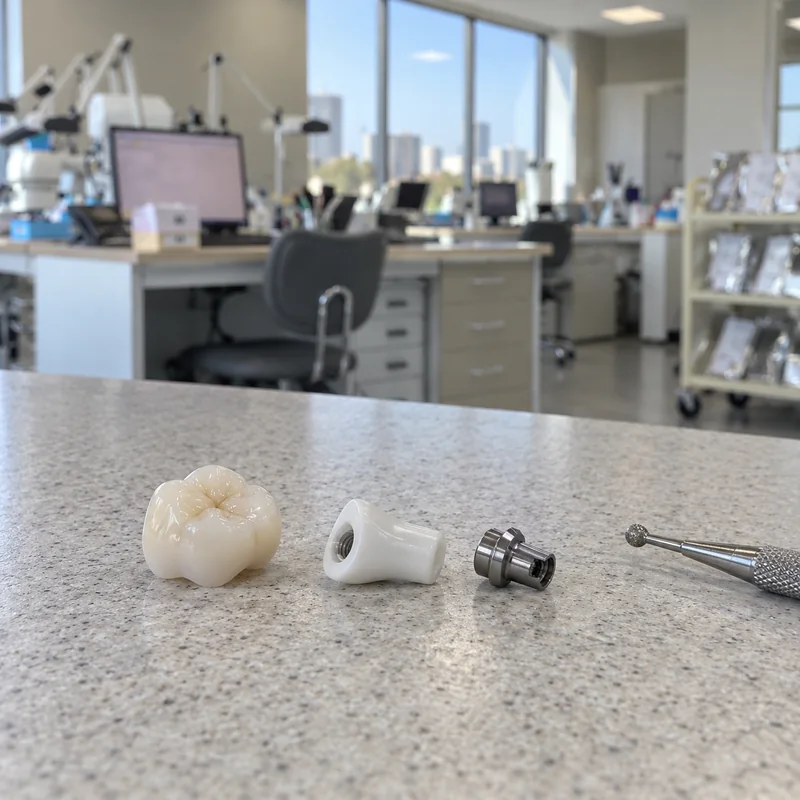
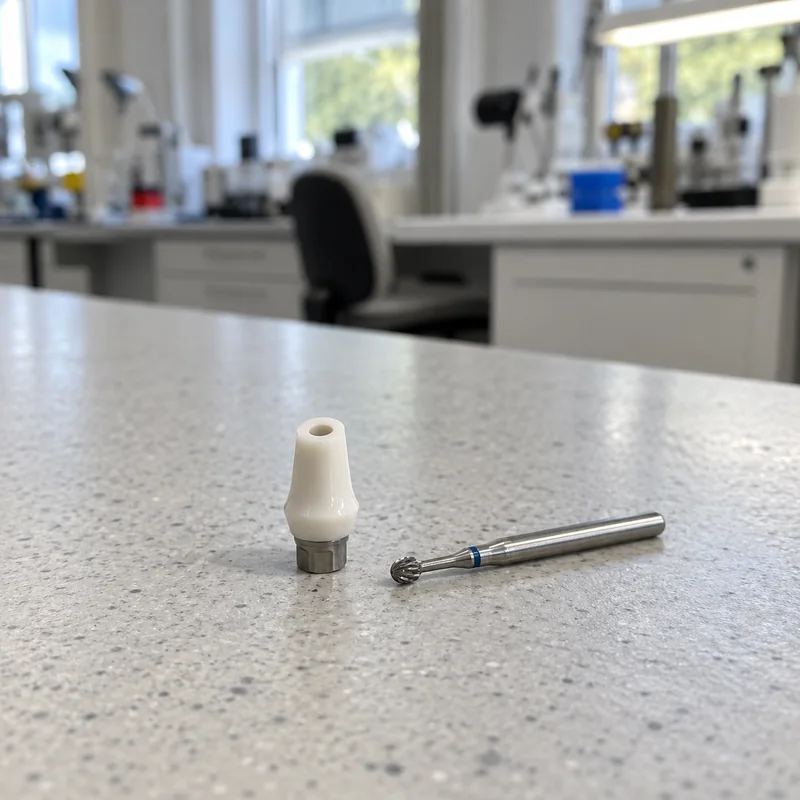
Designed and milled from solid zirconia, then bonded to a titanium base that attaches to the implant with a titanium screw. Tooth-colored up to the tissue, it is a very versatile esthetic abutment, designed from a scanned wax-up or entirely in CAD/CAM.
- Best for
- Esthetic cases, front teeth
- Built from
- Zirconia on a titanium base
- Designed
- From a scanned wax-up, or in CAD/CAM
 Two materials
The zirconia gives the esthetics; the titanium base gives a metal-to-metal connection to the implant.
- Material
- Zirconia bonded to a titanium base
- Good for
- Front teeth and thin tissue, where metal would show grey
- Design
- From a scanned wax-up or in CAD/CAM
- Walls
- At least about 0.5 mm of zirconia
- Screw
- Torqued to the implant maker’s value
- Careful with
- Heavy loads on molars and bruxers: titanium is the safer choice there
 How it is designed
From a scanned wax-up, or entirely in CAD/CAM. Either way the shape is designed for the site before it is milled.
- Material
- Zirconia bonded to a titanium base
- Good for
- Front teeth and thin tissue, where metal would show grey
- Design
- From a scanned wax-up or in CAD/CAM
- Walls
- At least about 0.5 mm of zirconia
- Screw
- Torqued to the implant maker’s value
- Careful with
- Heavy loads on molars and bruxers: titanium is the safer choice there
 Three materials
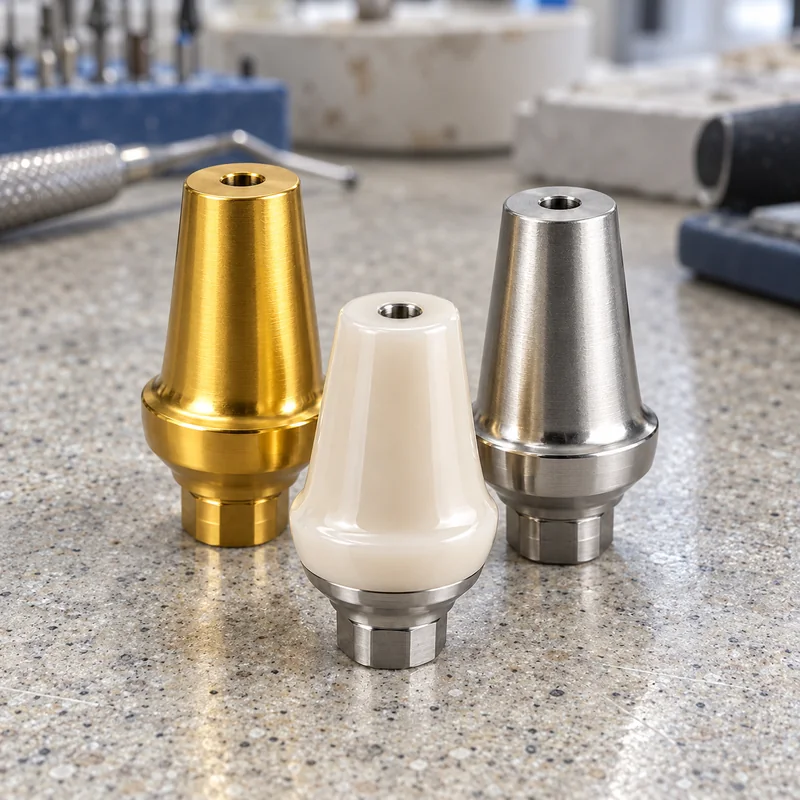
Titanium for strength, zirconia where a white abutment keeps thin gum from turning grey, and gold-tone titanium to warm the shade under the crown.
- Material
- Zirconia bonded to a titanium base
- Good for
- Front teeth and thin tissue, where metal would show grey
- Design
- From a scanned wax-up or in CAD/CAM
- Walls
- At least about 0.5 mm of zirconia
- Screw
- Torqued to the implant maker’s value
- Careful with
- Heavy loads on molars and bruxers: titanium is the safer choice there
 Tooth-coloured
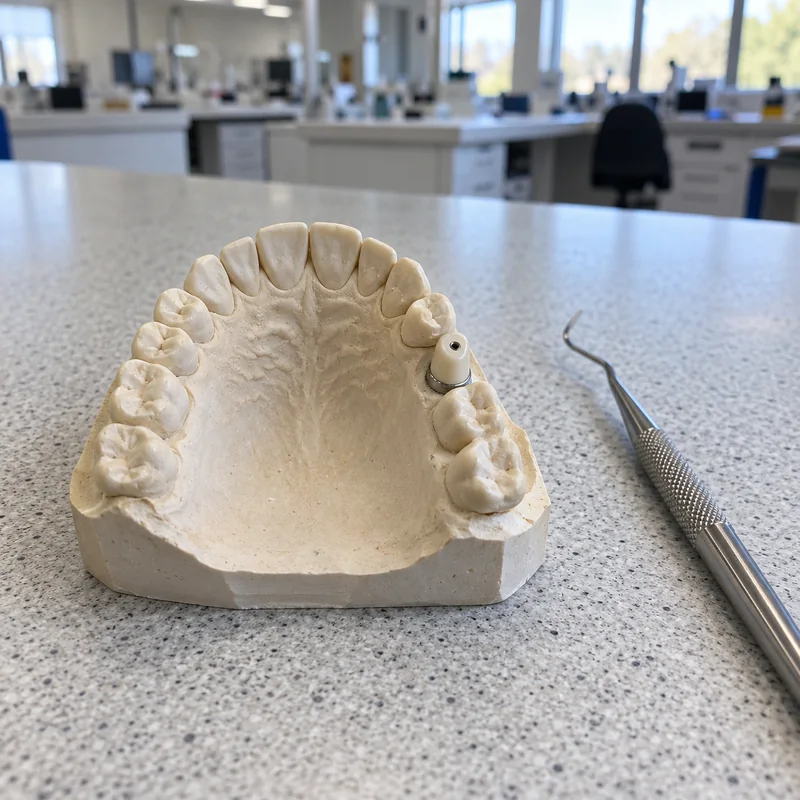
A zirconia abutment is white, so gum tissue over it does not show the grey of metal. The crown is then cemented over it.
- Material
- Zirconia bonded to a titanium base
- Good for
- Front teeth and thin tissue, where metal would show grey
- Design
- From a scanned wax-up or in CAD/CAM
- Walls
- At least about 0.5 mm of zirconia
- Screw
- Torqued to the implant maker’s value
- Careful with
- Heavy loads on molars and bruxers: titanium is the safer choice there
Screw-retained crowns
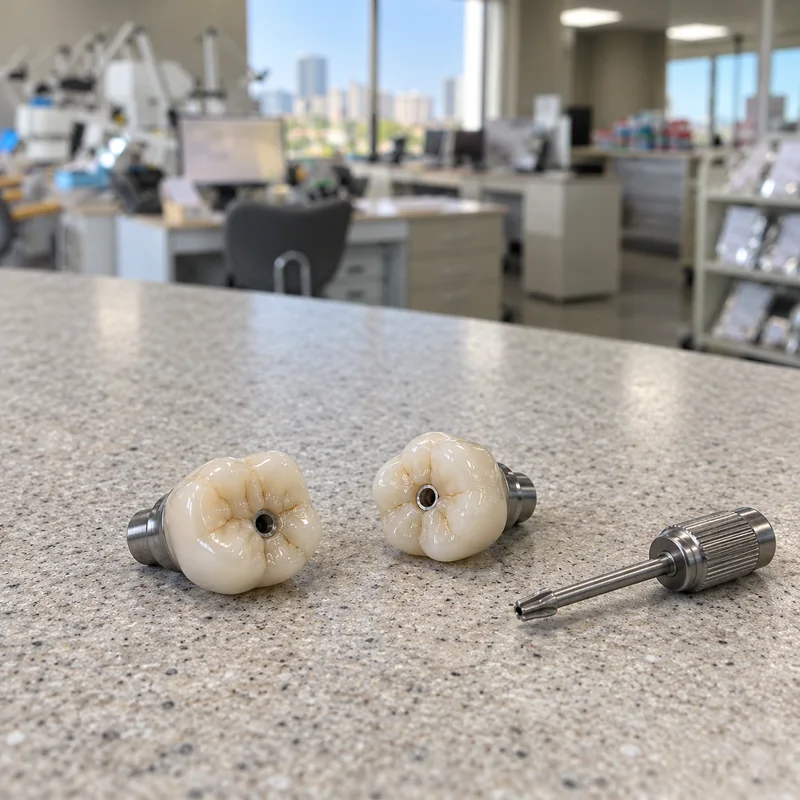
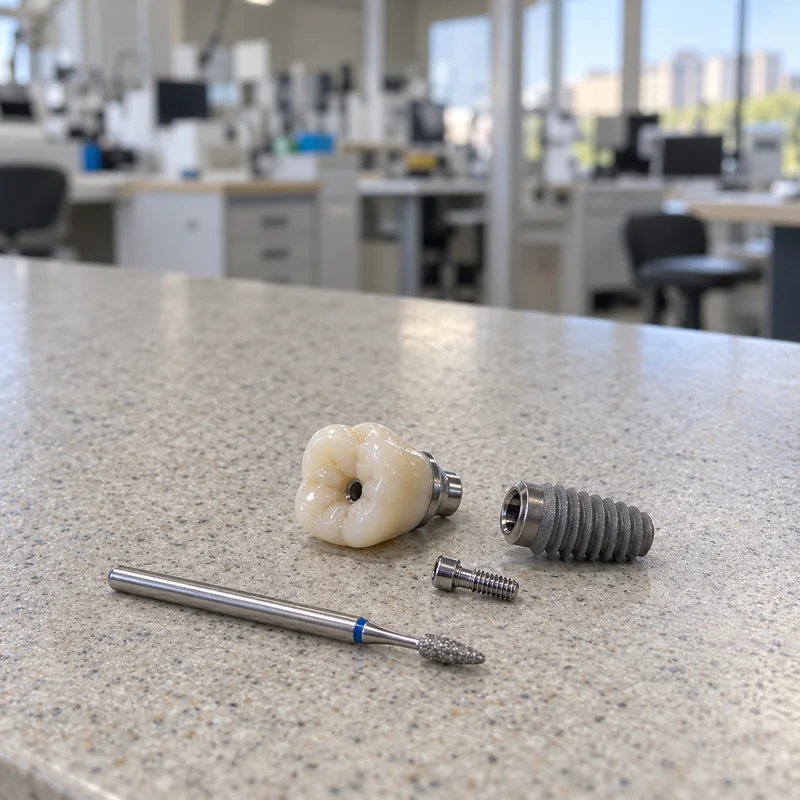
Monolithic solid zirconia on a titanium base, held to the implant by a screw instead of cement. Retrievable, cement-free and durable: the crown can be removed without damage for cleaning, a new screw, or a look at the soft tissue and neighboring teeth.
- Best for
- Limited interocclusal clearance, or where residual cement is a concern
- Built from
- Monolithic zirconia on a titanium base
- Retention
- Screw, no cement
 Why choose it
No residual cement under the tissue, and the crown comes off without damage whenever it needs maintenance.
- Material
- Monolithic zirconia on a titanium base
- Space
- Works with limited clearance, from about 4 to 5 mm
- Access
- Seal the screw channel with PTFE tape and composite
- Needs
- An implant angled so the channel exits through the biting surface or tongue side
- Screw
- Torqued to the implant maker’s value
- Maintenance
- Comes off for cleaning, a new screw or a tissue check
 Strength
Monolithic zirconia on a titanium base offers exceptional fracture resistance and esthetics, even where space is limited.
- Material
- Monolithic zirconia on a titanium base
- Space
- Works with limited clearance, from about 4 to 5 mm
- Access
- Seal the screw channel with PTFE tape and composite
- Needs
- An implant angled so the channel exits through the biting surface or tongue side
- Screw
- Torqued to the implant maker’s value
- Maintenance
- Comes off for cleaning, a new screw or a tissue check
BellaTek Encode
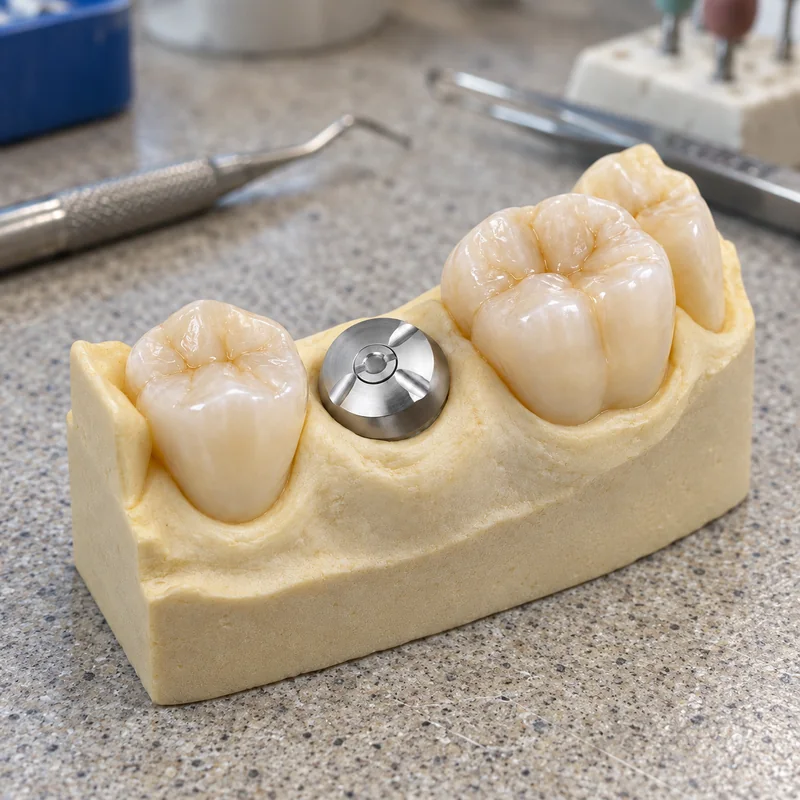
An impression system from ZimVie (formerly Zimmer Biomet) that removes the need for implant-level impressions. Codes on the healing abutment record the implant’s position, so the abutment can be designed without removing it, which preserves the soft tissue.
- Best for
- Restoring without removing the healing abutment
- Impression
- Above the gum line, healing abutment in place
- Abutment
- Titanium or gold-colored titanium nitride
 The impression
Take a simple impression or scan above the gum line, with the coded healing abutment still in place.
- Maker
- ZimVie (formerly Zimmer Biomet)
- Impression
- Scan or impression with the coded healing abutment in place
- No need for
- Implant-level impressions or transfer copings
- Abutment
- Patient-specific, titanium or gold-tone titanium nitride
- Systems
- ZimVie implants on its compatibility list
 The abutment
Patient-specific abutments are made in titanium or gold-colored titanium nitride, for an esthetic result.
- Maker
- ZimVie (formerly Zimmer Biomet)
- Impression
- Scan or impression with the coded healing abutment in place
- No need for
- Implant-level impressions or transfer copings
- Abutment
- Patient-specific, titanium or gold-tone titanium nitride
- Systems
- ZimVie implants on its compatibility list
What to send
- The implant system and platform on the Rx form
- A scan with scan bodies, or an impression with copings and analogs
- The opposing arch and bite
Talk to the lab first
Questions about the implant system, abutment options or a full-arch case? Call (305) 940-4040, or send the lab a message.
Send your case to Ceramics Dental Lab
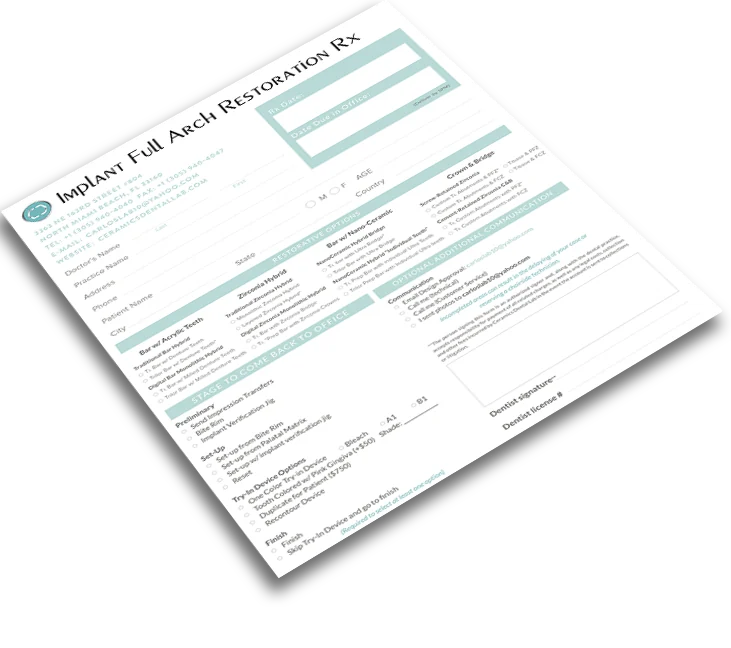
We accept conventional impressions, and digital files from most intraoral scanners.